China’s rotary voice coil actuator sector serves applications where controlled angular motion matters more than continuous rotation. These actuators can move camera mirrors, optical filters, and compact inspection mechanisms through precise, limited arcs. Their value is practical: fast response, direct drive, and fewer transmission parts. Yet performance depends on the whole assembly, not a specification sheet alone.
The wider automation trend provides useful context. The International Federation of Robotics reported 541,302 industrial robots installed worldwide in 2023, in its World Robotics 2024 report. That figure does not measure rotary voice coil actuator demand specifically. It does show the scale of systems that increasingly rely on accurate motion components. No single public dataset cleanly ranks Chinese manufacturers by actuator quality. Comparisons therefore need care. This guide examines manufacturers through engineering capability, torque and stroke data, thermal behavior, customization, testing, and technical support. Ask for measured response curves and repeatability results, not just brochure claims. Small details matter. A connector location or heat path can affect integration on a crowded machine. The comparison is not perfect; supplier documentation and test conditions vary. Still, a careful review can help buyers identify capable Chinese manufacturers and build a shortlist grounded in application needs, rather than headline specifications.
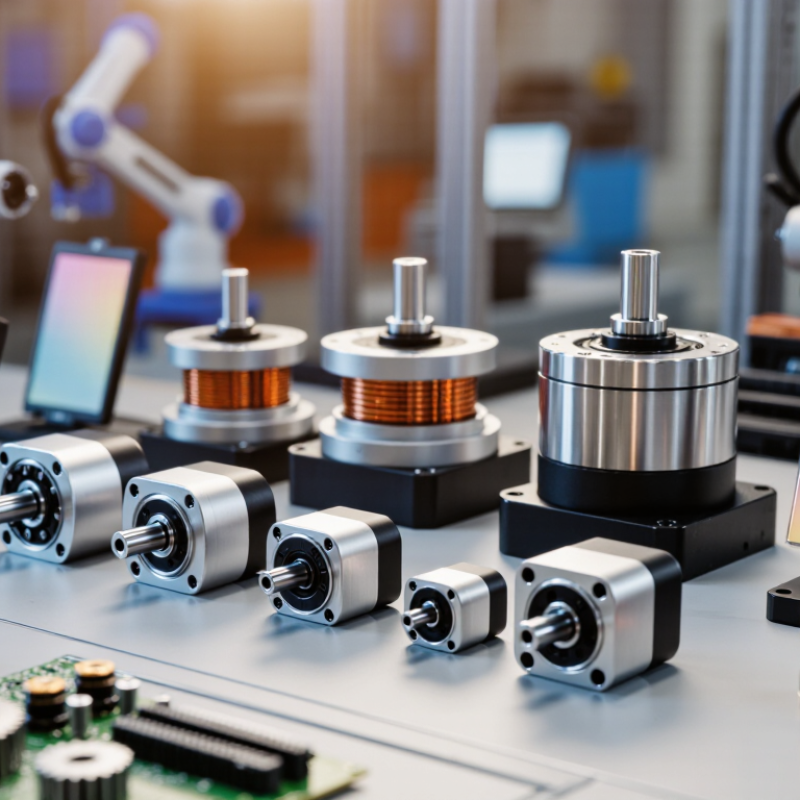
A rotary voice coil actuator converts electrical current into controlled angular motion. Its main parts are a coil, a permanent-magnet assembly, a moving arm, and a supporting shaft or flexure. The magnet creates a stable field. When current flows through the coil, the interaction produces torque and turns the arm. Reverse the current, and the direction changes. Simple in principle.
Many designs use bearings or flexures to guide motion and reduce unwanted play. Mechanical stops can limit the rotation, while an encoder may report the arm’s position to a controller. Some units rely on an external spring for return force; others are driven actively in both directions. The right arrangement depends on travel, load, and response needs. In a small optical mechanism, for example, the actuator may move a mirror through a few degrees, where smooth motion matters more than a full rotation. Torque is generally related to coil current within the actuator’s working range, but heating can restrict continuous operation. That detail is easy to overlook. Real performance also depends on alignment, friction, and control tuning, so a clean diagram alone cannot predict how a unit behaves in an assembled device.
Idealized relationship between input current and normalized torque
A rotary voice coil actuator uses a current-carrying coil in a permanent magnet’s field to produce rotational torque. In its linear operating region, torque is proportional to current; the chart shows this idealized relationship, not measured data for a specific actuator. The coil, magnetic circuit, rotor, and bearings together determine practical performance.
In a rotary voice coil actuator, torque is produced when current flows through a coil inside a magnetic field. The working relationship is T = Kt × I. Here, T is torque in newton-metres, I is current in amperes, and Kt is the torque constant in N·m/A. If Kt is 0.08 N·m/A and the coil carries 2 A, the estimated torque is 0.16 N·m. The current’s direction also determines the torque direction. Simple, but useful.
For manufacturers and engineers, Kt helps connect electrical drive requirements with mechanical performance. A higher Kt can provide more torque for the same current, though coil design, magnetic gaps, and actuator geometry all matter. In a real unit, Kt may vary slightly with rotor angle or operating conditions. Check the measurement method and usable motion range before comparing specifications. A number alone can mislead.
The equation describes ideal torque, not every operating limit. Coil resistance creates heat, and sustained current may need to be lower than a brief peak value. Mounting stiffness and the attached load affect how accurately the actuator follows a command. Measure current and temperature during representative motion tests. Small details count. I would also recheck results after assembly; alignment errors can quietly change performance.
When comparing rotary voice coil actuators from Chinese manufacturers, torque figures need context. A peak value may look impressive, yet continuous torque can be lower after the coil heats up. Check the load, drive current, and duty cycle behind each specification. A small mirror or valve arm may need quick acceleration, not simply high holding torque. The distinction matters.
Angular stroke affects more than positioning range. A unit moving ±10 degrees may suit a compact scanning task, while a larger stroke can introduce different settling demands. Ask whether the stated range is mechanical or controlled travel. Bandwidth figures also depend on load and test setup. A bare actuator can respond faster than one carrying a real lens, cable, or linkage. Numbers need conditions.
Service life deserves equally careful comparison. Request cycle-test details, including stroke, frequency, temperature, and failure criteria. A million cycles under light load does not predict performance under heavier, repeated motion. Small details matter. I would also compare bearing design, coil temperature limits, and available test records. Sometimes datasheets omit the setup; that makes a direct ranking less reliable, not more. Use the same load and motion profile when requesting quotes, then compare measured torque, settling time, and wear evidence alongside purchase price.
China’s top rotary voice coil actuator manufacturers distinguish themselves through focused product portfolios and measurable engineering capabilities. Offerings may include standalone rotary actuators, compact motion modules, matched drivers, and custom assemblies. Buyers should compare torque, angular travel, response time, and continuous-duty limits—not just peak performance. Small details matter: cable routing, mounting-hole alignment, and heat near the coil can affect integration.
The International Federation of Robotics reported 276,288 industrial robot installations in China in 2023, about 51% of global installations. This figure comes from World Robotics 2024 and signals a substantial automation market, though it does not measure voice coil actuator demand directly. That distinction matters. Manufacturers serving precision equipment need engineers who can discuss load inertia, magnetic-gap tolerances, position feedback, and thermal rise using application-specific test data.
Quality is more than a polished sample. Ask how repeatability is tested across temperature, whether life-cycle tests match the intended duty cycle, and how production units are checked. Look for documented inspection methods and clear operating limits. Yet specifications can still miss real-world vibration or poor fixtures; I would treat initial test results as evidence, not a guarantee. A careful supplier should welcome that scrutiny.
China Top Rotary Voice Coil Actuator Manufacturers
Choosing a rotary voice coil actuator starts with the real load, not the catalog’s largest torque figure. Include the moving part, fixture, cables, and any offset from the rotation axis. A 0.8 kg assembly mounted far from the shaft may demand more torque than its weight suggests. Check inertia and acceleration together. Close estimates are useful, but actual fixtures can surprise you.
Peak torque helps with brief acceleration or resistance, while continuous torque and duty cycle determine whether the actuator can repeat that motion without overheating. If a mechanism moves for two seconds, then rests for eight, record that pattern and confirm thermal limits under real operating conditions. Also define control needs: required angle, settling time, feedback resolution, and how smoothly motion must stop. A fast actuator is not automatically a precise one.
Tips: Ask manufacturers for torque-versus-speed data, thermal limits, and test conditions—not just a peak number. Share your motion profile and mounting sketch. Verify the proposed actuator with a representative load before finalizing the design. It may feel slower. That can be the safer choice.
Rotary voice coil actuator selection guide: The load cases below are engineering examples, not product ratings or guaranteed operating limits. Confirm torque, travel, thermal limits, and control performance against the selected actuator’s datasheet.
| Illustrative Application | Payload and Effective Radius | Estimated Load Inertia | Example Angular Acceleration | Inertial Peak Torque | Duty-Cycle Considerations | Control and Selection Needs |
|---|---|---|---|---|---|---|
| Optical mirror positioning | 0.20 kg payload; 50 mm effective radius | 0.0005 kg·m², approximated as mass × radius² | 100 rad/s² | 0.05 N·m, before friction and external loads | Often short, intermittent moves; verify winding temperature for the actual move-and-hold profile. | Fine angular resolution, low backlash, encoder feedback, and a stable position loop are commonly important. |
| Small inspection camera or sensor head | 1.0 kg payload; 100 mm effective radius | 0.010 kg·m², approximated as mass × radius² | 50 rad/s² | 0.50 N·m, before friction and external loads | Repeated scanning can raise RMS heating even when peak torque is brief; evaluate the complete motion cycle. | Check acceleration, settling time, encoder resolution, and whether the actuator can meet the required angular travel. |
| Compact indexing fixture | 2.0 kg payload; 150 mm effective radius | 0.045 kg·m², approximated as mass × radius² | 20 rad/s² | 0.90 N·m, before friction and external loads | For frequent indexing, compare the cycle’s RMS torque with the actuator’s continuous thermal capability. | Assess peak-current capacity, position repeatability, settling behavior, and the need for a holding brake or counterbalance. |
| Lightweight end-effector or flap | 0.50 kg payload; 80 mm effective radius | 0.0032 kg·m², approximated as mass × radius² | 80 rad/s² | 0.256 N·m, before friction and external loads | Frequent reversals may increase RMS current and heating; include pauses, dwell time, and holding current in the thermal check. | Verify bidirectional torque, current-loop bandwidth, position feedback, and safe behavior at travel limits. |
| Low-inertia pointing mechanism | 0.10 kg payload; 40 mm effective radius | 0.00016 kg·m², approximated as mass × radius² | 200 rad/s² | 0.032 N·m, before friction and external loads | High acceleration may create brief peak-current demand; check peak duration and allowable current, not only average duty cycle. | Prioritize low moving inertia, adequate current-loop response, encoder feedback, and achievable settling time. |
Calculation and sizing notes: The example inertia uses a point-mass approximation, J = m × r², and inertial torque is calculated as τ = J × α. Actual required peak torque must also account for friction, cable forces, gravity where applicable, external process loads, and acceleration of actuator-mounted components. Duty cycle alone does not determine thermal suitability: use the real motion profile to calculate RMS current or RMS torque and compare it with the actuator and amplifier ratings. Rotary voice coil actuators are generally direct-drive devices with limited angular travel; confirm stroke, feedback, current limits, and thermal ratings for the specific design.
Sierramotion engineers help customers design solutions to complex motion problems. Whether a simple coil, or a precision motion assembly working in vacuum, Sierramotion has the experience to create a solution that works the first time.