2026 Best LCD Display Module Suppliers for Global Buyers
Choosing the right Lcd Display Module supplier in 2026 requires more than comparing online prices. Global buyers need dependable engineering, stable production, and clear communication across borders. A bright screen means little if colors shift between batches or the connector fails during assembly.
This guide examines suppliers through practical purchasing criteria. These include display technology, resolution, viewing angle, brightness, touch integration, customization capability, and production capacity. It also considers sample quality, quality-control procedures, lead times, packaging, and after-sales support. A serious supplier should provide accurate datasheets, realistic specifications, and traceable testing records. Factory audits, certifications, and customer references can strengthen confidence, but they should not replace independent verification.
No supplier is perfect. That matters. A manufacturer may offer excellent OLED integration but limited low-volume support. Another may provide attractive pricing but slower international logistics. Buyers should request samples and test them under real conditions, including sunlight, temperature changes, vibration, and repeated touch input. Small details often expose large risks. For example, a poorly fitted bezel can delay an otherwise successful device launch.
The suppliers discussed here are assessed for global purchasing needs, not promotional visibility alone. Their experience serving medical equipment, industrial controls, automotive systems, or consumer electronics can reveal useful production strengths. However, market conditions change quickly, and supplier performance may vary by project. Buyers should confirm current capabilities, payment terms, compliance documents, and delivery commitments before signing an order. Careful evaluation remains the safest advantage.
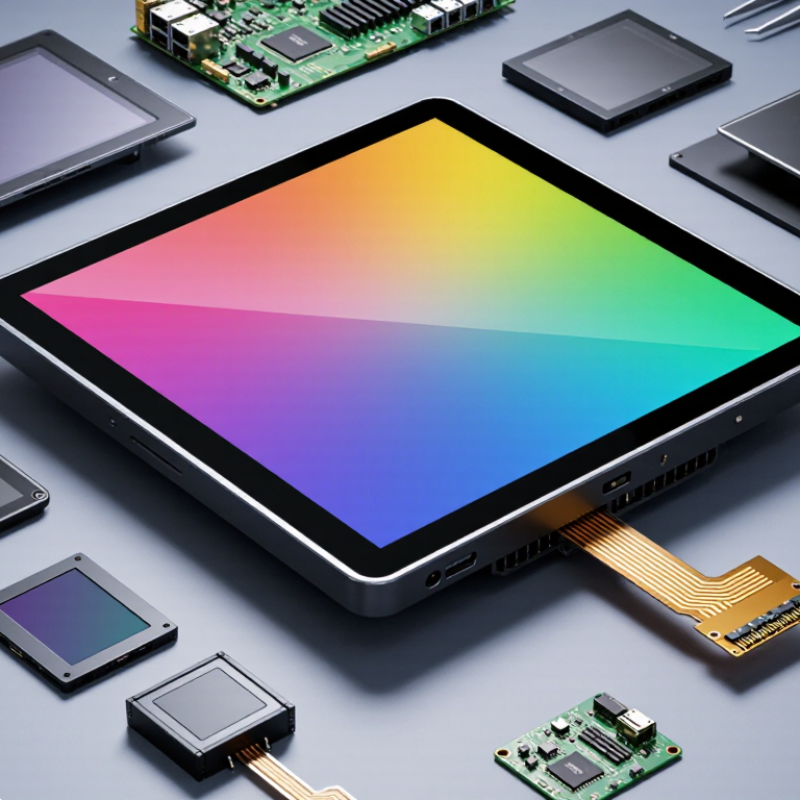
LCD Display Modules: Types, Features, and Common Applications
LCD display modules vary widely, even when their sizes look similar. Monochrome modules suit meters, thermostats, and simple control panels. TFT modules provide color, sharper graphics, and faster visual feedback. IPS panels offer stable colors from wider angles, while TN panels often reduce cost and response time. VA displays can deliver stronger contrast for enclosed equipment.
Key features include resolution, brightness, viewing angle, backlight life, operating temperature, and interface type. Common interfaces include RGB, LVDS, MIPI, and SPI. A supplier should provide complete mechanical drawings, sample units, test data, and consistent production records. In practice, datasheets are not always enough. Request a sample and inspect it under the real light conditions.
Applications shape the correct choice. Industrial equipment may need glove-friendly touch panels, sunlight readability, and resistance to vibration. Medical instruments usually require clear images, stable performance, and controlled cleaning compatibility. Vehicle displays need broad temperature tolerance and dependable operation during vibration. Handheld devices often prioritize low power consumption and thin construction. Size changes everything. A lower price may hide weak connectors, uneven backlighting, or limited spare-part support. I have seen projects delayed because a small cable mismatch was overlooked. The lesson is simple: confirm the electrical, optical, and mechanical details before approving a global supplier.
Key Criteria for Choosing a Reliable LCD Module Supplier
2026 Best LCD Display Module Suppliers for Global Buyers
Key Criteria for Choosing a Reliable LCD Module Supplier
A reliable LCD module supplier should prove performance, not merely promise it. IDC reported 1.24 billion smartphones shipped globally in 2024, a 6.4% annual increase. This scale makes stable production, replacement support, and transparent capacity essential. Request sample units from the same production line used for mass orders. Check brightness, contrast, viewing angle, dead pixels, touch response, and connector fit under real operating conditions. Shortlist fewer suppliers.
Quality systems matter, but certificates are not enough. The ISO Survey 2023 recorded more than 1.26 million ISO 9001 certificates worldwide. Certification shows process discipline, not guaranteed module quality. Ask for incoming-material records, calibration logs, aging-test results, and batch-level traceability. A practical audit should examine humidity control, ESD protection, clean-room handling, and failure analysis. Small details reveal habits.
Commercial reliability deserves equal attention. Compare lead times, minimum order quantities, engineering response, tooling ownership, and change-notification procedures. Ask how the supplier handles discontinued components or sudden panel shortages. Omdia’s display market research continues to track intense capacity and pricing pressure across LCD production, so low quotations may hide weaker yield or support. Our own first-pass samples can look convincing. That is the uncomfortable part. Run a pilot order, measure defect rates, and review corrective actions before signing a long-term agreement.
2026 Best LCD Display Module Suppliers for Global Buyers
Key criteria for choosing a reliable LCD module supplier
This 100-point procurement model prioritizes product quality, display performance, supply-chain reliability, regulatory compliance, customization capability, and commercial terms. Buyers can adjust the weighting according to application requirements, order volume, and target markets.
Leading LCD Display Module Suppliers for Global Buyers in 2026
Leading LCD Display Module Suppliers for Global Buyers in 2026 must offer more than competitive pricing. Buyers need stable quality, clear documentation, and dependable engineering support. MarketsandMarkets projects the global display market to reach about USD 177 billion by 2028. Its forecast signals continued demand for industrial, medical, automotive, and smart-home screens. LCD remains practical where brightness, long service life, and controlled costs matter.
A capable supplier should provide optical samples, dimensional drawings, aging-test results, and traceable production records. Ask for evidence of ISO 9001 systems and relevant environmental compliance. Automotive projects may require IATF 16949 processes. Check luminance, viewing angle, response time, operating temperature, connector durability, and expected product lifetime. Omdia’s display supply-chain analysis also highlights ongoing pressure on panel prices and production capacity. Low prices can hide weaker support. I have seen projects fail because buyers tested only the screen, not the cable, touch layer, or housing fit.
Tips: Compare at least three suppliers. Request a golden sample. Confirm minimum order quantities, tooling fees, lead times, warranty terms, and change-notification procedures. Review two production batches, not one. Report forecasts differ, and no supplier is perfect; your team should document risks before approving a long-term contract. A small pilot order often reveals color drift, uneven backlighting, or packaging damage before global deployment.
2026 Best LCD Display Module Suppliers for Global Buyers - Leading LCD Display Module Suppliers for Global Buyers in 2026
| Supplier Profile | Typical LCD Technology | Common Size Range | Typical Resolution Range | Interface Options | Typical Brightness | Operating Temperature | Touchscreen Capability | Typical MOQ | Typical Sample Lead Time | Common Compliance Coverage |
Profile A
General-purpose supplier | TFT-LCD, IPS or TN | 2.4–10.1 in | 240 × 320 to 1280 × 800 | RGB, MCU, SPI, MIPI DSI, LVDS | 250–800 cd/m² | −20°C to +70°C | Resistive and projected capacitive | 100–500 units | 3–6 weeks | RoHS, REACH, CE documentation available by model |
Profile B
Industrial-display supplier | Industrial IPS TFT-LCD | 3.5–15.6 in | 480 × 272 to 1920 × 1080 | RGB, LVDS, eDP, MIPI DSI | 500–1500 cd/m² | −30°C to +80°C | Glove-touch and cover-glass integration | 50–300 units | 4–8 weeks | RoHS, REACH, CE, UL-related material documentation |
Profile C
High-brightness supplier | Transmissive IPS or sunlight-readable TFT-LCD | 4.3–12.1 in | 480 × 272 to 1280 × 1024 | RGB, LVDS, eDP, MIPI DSI | 800–2000 cd/m² | −20°C to +70°C | Optional PCAP with anti-glare treatment | 100–500 units | 4–7 weeks | RoHS, REACH, CE; optical test reports by configuration |
Profile D
Monochrome-display supplier | STN, FSTN or monochrome graphic LCD | 1.5–5.7 in | 128 × 64 to 320 × 240 | Parallel, SPI, I²C, UART through controller board | 20–600 cd/m² | −20°C to +70°C | Resistive touch and custom key panels | 200–1000 units | 3–6 weeks | RoHS and REACH declarations commonly available |
Profile E
Custom-module supplier | Customized TFT-LCD with cover lens, FPC and housing | 2.8–21.5 in | 320 × 240 to 1920 × 1080 | RGB, LVDS, eDP, MIPI DSI, HDMI through controller | 300–1500 cd/m² | Application-dependent; commonly −30°C to +80°C | PCAP, resistive, optical bonding and custom bezel | 300–2000 units | 6–12 weeks after design approval | RoHS, REACH, CE; project-specific testing and documentation |
Profile F
Automotive-oriented supplier | Automotive-grade TFT-LCD | 5.0–15.6 in | 800 × 480 to 1920 × 720 | LVDS, eDP, MIPI DSI | 500–1200 cd/m² | −40°C to +85°C | Optional PCAP and optical bonding | 500–3000 units | 8–16 weeks | RoHS, REACH, CE; automotive quality documentation varies by program |
Buyer reference: Values are typical industry ranges for anonymous supplier profiles. Final specifications, pricing, MOQ, lead time, warranty, certification status and lifetime availability should be confirmed against the selected LCD module's current datasheet and quotation.
Manufacturing Standards, Customization, and Quality Control
2026 Best LCD Display Module Suppliers for Global Buyers
Manufacturing Standards, Customization, and Quality Control
Reliable LCD display module suppliers should show more than attractive specifications. Their factories need documented processes, trained operators, and traceable production records. ISO 9001-based systems can support consistency, while RoHS and REACH compliance help buyers manage material requirements. These documents should match the actual production site, not only a sales presentation.
Customization begins with the application. Suppliers may adjust screen size, viewing angle, brightness, connector position, touch technology, and operating temperature. An industrial control panel may need sunlight readability and glove operation. A handheld device may prioritize low power and thin glass. Engineers should review drawings, interface timing, mounting holes, and cable bending limits before approving tooling.
Quality control must continue beyond visual inspection. Strong suppliers perform incoming material checks, pixel testing, backlight uniformity checks, aging tests, and temperature cycling. ESD testing and vibration checks can expose problems before shipment. Ask for sample inspection reports and lot traceability. A perfect first sample is not guaranteed. Small color differences may appear after assembly, especially when multiple glass batches are used. This weakness deserves a written tolerance, not a vague promise. Suppliers should also explain their corrective-action process when failures occur. That response often reveals more experience than a polished factory tour.