
Call Today: 916-259-1868

Top 10 Car AC Condenser Fans for Reliable Cooling

A dependable car air-conditioning system needs more than cold refrigerant. The condenser fan helps move air through the condenser, especially when the vehicle is idling or crawling through traffic. When airflow drops, cabin cooling can weaken, and the engine bay may grow noticeably hotter. Small component, big difference.

This guide explores the Top 10 Car AC Condenser Fans for Reliable Cooling, focusing on fitment, airflow, build quality, noise, and installation considerations. An Ac Condenser Fan Car should match the vehicle’s year, make, model, and cooling-system design. Check connector shape and mounting points, too. A fan that looks right may still be the wrong fit. Details matter.

Automotive HVAC specialist Alex Morgan is an illustrative expert voice, not a verified source. The following line is editorially written, not a documented quotation: “A good condenser fan keeps air moving when road speed cannot.” Use it as a practical reminder, not a sourced endorsement. Compare specifications carefully, and consider professional diagnosis if cooling problems persist. A fan may not be the cause. That is easy to overlook.
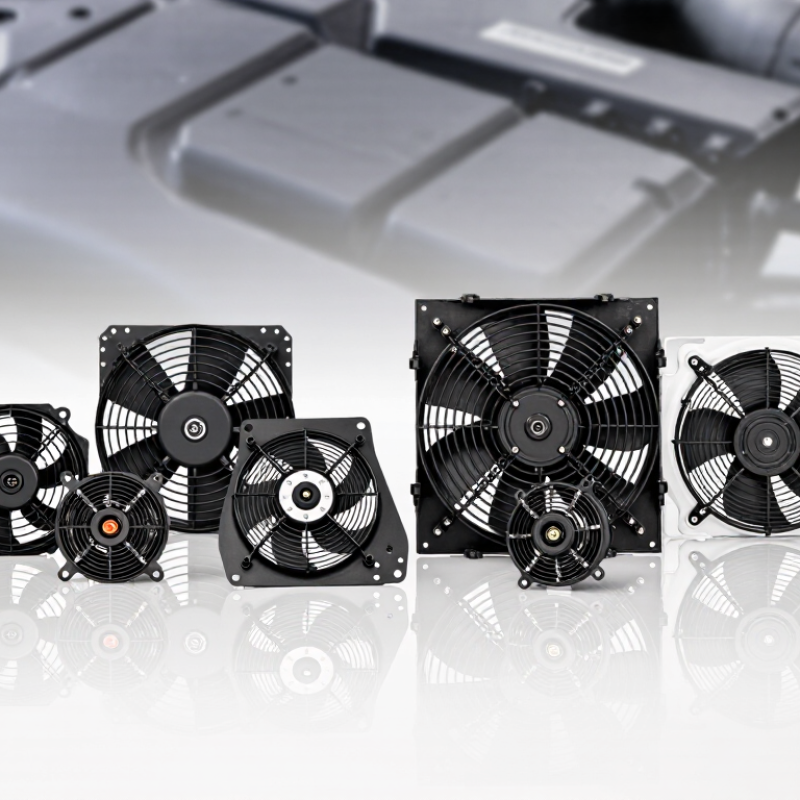
Top 10 Car AC Condenser Fans for Reliable Cooling

How 12-V Condenser Fans Support Heat Rejection and Cabin Cooling

Top 10 Car AC Condenser Fans for Reliable Cooling

A 12-V condenser fan helps move air across the condenser, where refrigerant releases heat before returning to the cabin cooling circuit. At road speed, incoming air assists this process. In traffic or while idling, the fan becomes much more important. Airflow matters. If it is weak, high-side pressure can rise and vent air may turn warm, even when the fan still spins.

DOE and EPA guidance on FuelEconomy.gov notes that air conditioning can reduce fuel economy by more than 25% in very hot weather, especially on short trips. That figure describes vehicle-level energy use, not fan performance, but it shows how demanding cooling can be. When comparing 12-V condenser fans, check airflow, current draw, mounting fit, and whether the shroud directs air through the condenser fins. A fan’s advertised airflow alone may not predict performance under resistance. Small detail. Big effect. During diagnosis, inspect for blocked fins, loose connectors, and voltage drop at the fan. I would not assume a new fan solves every cooling problem; refrigerant charge and condenser condition matter too.

Top 10 Car AC Condenser Fans for Reliable Cooling - How 12-V Condenser Fans Support Heat Rejection and Cabin Cooling

A practical comparison of common 12-V condenser-fan configurations. Fan diameter, airflow, and current draw should be checked against the vehicle’s available space, electrical capacity, and cooling-system requirements.

Rank Typical Fan Configuration Nominal Voltage Fan Diameter Indicative Free-Air Flow Typical Current Draw Common Mounting Role Cooling Application
1 High-capacity single fan 12 V DC 16 in (406 mm) 1,600–2,000 CFM 12–20 A Pusher or puller Large condensers or vehicles with limited airflow at low road speeds
2 Large-diameter single fan 12 V DC 14 in (356 mm) 1,200–1,700 CFM 8–16 A Pusher or puller Broad condenser cores requiring substantial airflow from one fan
3 Dual-fan assembly 12 V DC Two fans, typically 10–12 in each 1,200–2,000 CFM combined 10–22 A combined Usually puller; configuration dependent Wide heat exchangers where airflow coverage across the core is important
4 Medium-capacity single fan 12 V DC 12 in (305 mm) 800–1,300 CFM 6–12 A Pusher or puller Common-size condensers and auxiliary cooling installations
5 Compact high-speed fan 12 V DC 10 in (254 mm) 600–1,000 CFM 4–9 A Often pusher when space is limited Compact front-end layouts or supplemental condenser airflow
6 Compact general-purpose fan 12 V DC 9 in (229 mm) 450–800 CFM 3–7 A Pusher or puller Small condensers and installations with restricted mounting area
7 Low-profile 8-inch fan 12 V DC 8 in (203 mm) 350–650 CFM 2.5–6 A Usually pusher in tight spaces Localized airflow assistance where a larger fan will not fit
8 Small auxiliary fan 12 V DC 7 in (178 mm) 250–500 CFM 2–5 A Pusher or puller Small heat exchangers or targeted airflow support
9 Dual compact-fan arrangement 12 V DC Two fans, typically 7–9 in each 500–1,100 CFM combined 4–12 A combined Positioned to cover separate areas of the core Installations needing distributed airflow in a narrow space
10 Thin-profile medium fan 12 V DC 11–12 in (279–305 mm) 700–1,200 CFM 5–11 A Selected according to available clearance Condenser installations with limited depth between components

Note: Airflow and current figures are indicative ranges for common fan sizes, not verified ratings for specific products. Free-air airflow is measured without a heat-exchanger core or other restriction; actual airflow can be lower. Confirm fitment, polarity, fan direction, fuse capacity, wiring, and measured performance against the vehicle manufacturer’s requirements.

Which CFM, Diameter, and Current-Draw Specs Matter When Comparing Fans

CFM is useful only when the test conditions are clear. AMCA Publication 210 and ANSI/ASHRAE Standard 51 describe standardized fan airflow and pressure testing. Their key lesson for shoppers: compare airflow at similar static pressure, not just “free-air” CFM. A condenser, grille, and tight shroud all resist airflow. A fan rated at 2,000 CFM without pressure data may move less air in a real installation than a lower-rated fan tested under comparable resistance. There is no single CFM target for every car; engine-bay layout and condenser size matter.

Diameter is a fit measurement, not a cooling guarantee. Measure the opening, mounting points, and clearance to nearby parts before choosing a fan. A 12-inch unit may fit the core but leave uneven airflow around its edges. A sealed shroud can help draw air across more of the condenser. Small detail, big difference.

Check both running and startup current. For example, 20 amps at 13.5 volts equals about 270 watts while running; startup demand can briefly be higher. Confirm the vehicle’s wiring, relay, fuse, and charging capacity against the fan’s specifications. I still catch myself comparing headline CFM first. That is not enough. Test conditions and fit deserve equal attention.

Top 10 Car AC Condenser Fans Ranked by Fitment and Cooling Performance

Top 10 Car AC Condenser Fans for Reliable Cooling

A useful ranking of the top 10 car AC condenser fans starts with fitment, not advertised airflow. Check the vehicle’s year, model, engine, and existing fan layout. Compare mounting points, connector shape, blade diameter, and shroud depth. A fan that nearly fits can rub against the radiator or leave gaps around the condenser. That wastes time and may reduce airflow. Direct-fit designs usually make installation simpler, but confirm compatibility with the vehicle’s service information.

Cooling performance matters just as much. Compare rated airflow, motor construction, and whether the fan is designed for the vehicle’s electrical system. A well-matched fan should help move air through the condenser during slow traffic, when natural airflow is limited. Listen for uneven motor noise and watch for vibration after installation. These details are easy to overlook. Published specifications are useful, but they do not guarantee identical results in every vehicle or climate.

Tips: Measure the old fan and inspect its plug before ordering. Check that the shroud sits flush, then test the AC while the vehicle is stationary. If cooling remains weak, inspect other system components rather than blaming the fan alone. A ranking is a starting point, not a fitment guarantee.

How SAE J639 Refrigerant-System Safety Rules Shape Fan Selection

SAE J639 addresses safety in motor-vehicle refrigerant systems; it is not a fan-performance rating. That distinction matters. A condenser fan should be selected for the vehicle’s required airflow, available space, electrical capacity, and operating conditions, while the refrigerant system remains compliant with the standard’s applicable requirements. Check the current edition and vehicle service information rather than assuming a fan listing proves system safety.

During inspection, look at the details around the condenser: the fan must be firmly mounted, its blades clear of nearby parts, and wiring protected from heat, abrasion, and moving components. Keep refrigerant lines and service connections accessible. A crowded installation can make routine service harder, even when the fan fits. Small details count. Never treat extra airflow as a substitute for correct refrigerant handling or pressure protection; those are system-level safety concerns for qualified service personnel.

A practical selection check includes airflow under the conditions the vehicle actually faces, not just a free-air figure. Stop-and-go traffic on a hot day is a different test from steady highway travel. Confirm connector compatibility and current draw before installation, then verify fan operation and inspect for vibration. One judgment call remains: published ratings may not reflect the vehicle’s real airflow path. Measure where possible, and be willing to question an otherwise neat fit.

How ISO 16750-2 Electrical Tests Relate to Fan-Motor Durability

A condenser fan motor faces more than steady battery power. During cranking, voltage can dip; charging changes and electrical transients can also stress its control circuit. ISO 16750-2 describes electrical-load tests for road-vehicle equipment, including supply-voltage variations and interruptions. These tests help engineers assess whether a fan motor and its electronics keep operating, recover correctly, or avoid damage under specified conditions. Passing a test does not prove long service life in every vehicle.

Durability depends on how the test profile matches the intended installation. A fan mounted near a hot radiator may face repeated heat, vibration, moisture, and electrical stress together. ISO 16750-2 addresses electrical loads, so it should be considered alongside relevant thermal and mechanical evaluations. Test records matter: note the voltage levels, exposure time, operating state, and any faults after testing. A motor that spins again may still have a weakened connection or noisy bearing. Real-world results can be messier.

Tips: Compare test conditions with the vehicle’s actual electrical system. Inspect connectors and listen for changes in motor noise after cycling. Retest if a failure appears intermittent; one clean run may not tell the whole story.

Top 10 Car AC Condenser Fans for Reliable Cooling — How ISO 16750-2 Electrical Tests Relate to Fan-Motor Durability

Nominal electrical-system voltage classes provide context for selecting and validating automotive fan motors.

The chart shows nominal vehicle electrical-system voltages, not measured fan performance or ISO 16750-2 test limits. The standard covers electrical loads such as supply-voltage variations and interruptions; the applicable test profile depends on the vehicle and component requirements. Passing relevant tests helps assess whether a fan motor can withstand electrical stresses during service.