Top 10 Linear Rotary Motor Suppliers Worldwide
The global demand for precise motion systems is reshaping factory design. Linear rotary motor technology now supports indexing, dispensing, inspection, semiconductor handling, and compact assembly equipment. These applications require more than speed. They demand repeatability, thermal stability, low vibration, and reliable integration with servo controls.
Industry reports provide useful context. The International Federation of Robotics reported 541,302 industrial robot installations worldwide in 2023. That figure confirms continued investment in automated production, where advanced motion components often determine cycle quality. MarketsandMarkets has also identified strong growth across the broader linear motion and industrial automation sectors. Grand View Research reports similar momentum in automation equipment, driven by electronics, electric vehicles, medical devices, and precision manufacturing. These reports do not isolate every linear rotary motor application. Still, they reveal the market pressure behind supplier innovation.
This guide reviews ten notable linear rotary motor suppliers worldwide. The comparison considers product architecture, axial and rotational performance, positioning accuracy, customization, control compatibility, service coverage, and documented industrial experience. Technical datasheets matter. So do field support and realistic delivery capabilities. No ranking is perfect. Supplier information can change, and regional performance is not always reported consistently. Buyers should verify torque curves, duty cycles, encoder options, and environmental ratings before choosing a partner. A polished catalog is not enough. The strongest supplier may be the one that answers difficult engineering questions clearly.
Linear Rotary Motors: Definition, Design, and Operating Principles
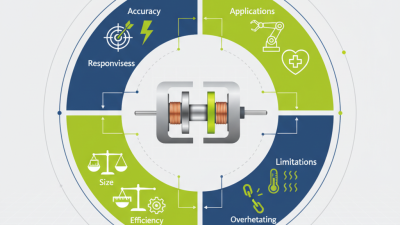
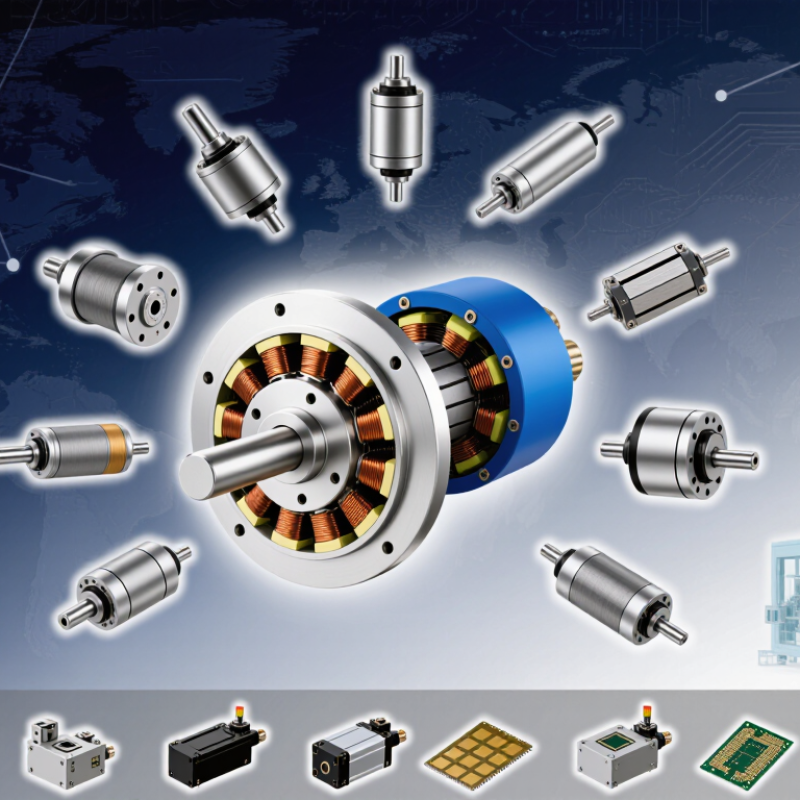
A linear rotary motor combines straight-line travel and angular rotation in one electromagnetic actuator. Unlike a conventional motor with a separate screw or gearbox, it can position and rotate a tool through coordinated control. One axis can advance while the other turns. This arrangement saves space and reduces mechanical backlash.
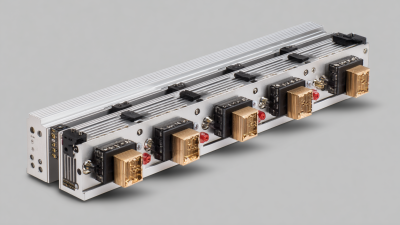
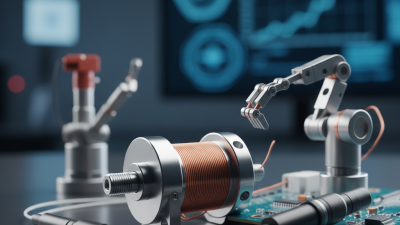
Its design usually includes permanent magnets, copper windings, position sensors, and two control loops. One magnetic field produces linear thrust. Another generates rotary torque. High-resolution encoders report position, speed, and angular alignment to the controller. Some designs use a tubular moving magnet assembly. Others combine a linear motor with a torque motor around the same shaft. Compact packaging matters.
During operation, the drive supplies carefully timed current to each winding. Feedback then corrects small errors caused by load changes, vibration, or heat. In practical testing, engineers should check thrust, torque, repeatability, temperature rise, and cable movement. A motor may meet its peak rating briefly but fail under continuous duty. That detail is easy to overlook.
The two motions can interfere with each other through magnetic coupling and structural flexing. Good tuning reduces this effect, but it rarely disappears completely. I would not trust catalog figures alone. Real performance depends on payload, acceleration, mounting stiffness, lubrication, and control bandwidth. Supplier documentation becomes more useful when supported by sample testing and traceable measurement data.
Top 10 Linear Rotary Motor Suppliers Worldwide
Linear Rotary Motors: Definition, Design, and Operating Principles
A linear rotary motor combines two independently controlled motion functions in one actuator: linear travel and continuous or indexed rotation. This chart compares the number of independently controlled motion axes provided by common actuator configurations. A linear rotary motor supports two motion axes, while linear-only and rotary-only actuators each support one.
Key Criteria for Evaluating Global Linear Rotary Motor Suppliers
Evaluating global linear rotary motor suppliers requires more than comparing catalog ratings. The right supplier should provide measured torque, stroke, speed, and repeatability data under defined test conditions. Ask whether the figures reflect continuous operation or short laboratory trials. This distinction matters on production lines, where heat can change positioning accuracy within hours.
Engineering support is another decisive criterion. A capable supplier should explain load calculations, bearing requirements, feedback options, and controller compatibility in clear terms. Request sample motion profiles and application references from similar environments. Inspect the test method, not only the final number. Real evidence is stronger than polished claims.
Quality systems deserve equal attention. Review inspection records, traceability practices, failure analysis, and production capacity across regions. Confirm spare-part availability and realistic lead times. A low purchase price may become expensive when integration support is weak. One uncomfortable lesson is that customization can improve performance but reduce serviceability. Keep the design practical. Also examine communication during technical discussions; delayed or vague answers often predict difficult project stages. Independent validation may still be necessary, especially for high-cycle equipment. No supplier is perfect, and evaluation teams should record uncertainties instead of hiding them.
Performance, Applications, and Industry Comparison
Top 10 Linear Rotary Motor Suppliers Worldwide
Performance, Applications, and Industry Comparison
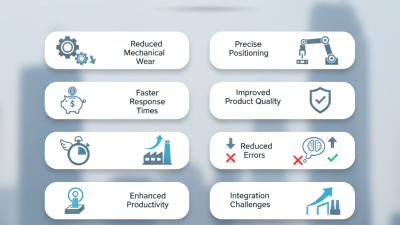
Comparing the top ten linear rotary motor suppliers requires more than reading speed ratings. Engineers should examine thrust, torque, positioning accuracy, repeatability, thermal drift, and duty-cycle stability. In factory trials, a motor may reach impressive acceleration but lose precision after hours of continuous operation. Numbers need context. Encoder resolution, bearing design, controller quality, and cooling can change the final result.
These motors support semiconductor stages, laboratory automation, packaging equipment, medical positioning systems, and precision inspection tools. Linear motion suits rapid travel, while rotary motion handles indexing, alignment, or tool orientation. A supplier with strong technical documentation may outperform a cheaper supplier during integration. However, product availability, service response, customization, and replacement lead times also affect the real cost. A ranking can mislead. Application fit matters more.
Tips: Define the load, stroke, speed, accuracy, and operating temperature before requesting quotations. Ask for measured performance curves, not only catalog values. Test thermal stability during a full production cycle. Review cable routing and controller compatibility early. I would also compare maintenance access, because a difficult installation can erase an attractive purchase price. One practical weakness remains: supplier data is not always measured under identical conditions. Independent testing is therefore worth the extra time.
Top 10 Linear Rotary Motor Suppliers Worldwide - Performance, Applications, and Industry Comparison
| Rank |
Supplier Profile |
Primary Region |
Motor Architecture |
Continuous Linear Force |
Peak Linear Force |
Continuous Rotary Torque |
Maximum Linear Speed |
Typical Positioning Repeatability |
Typical Applications |
Key Differentiator |
| 1 |
Supplier Profile A |
Western Europe |
Iron-core linear motor combined with direct-drive torque motor |
250–1,500 N |
600–3,000 N |
2–25 N·m |
2–5 m/s |
±0.1–0.5 μm |
Semiconductor handling, wafer inspection, precision assembly |
High stiffness and strong dynamic response |
| 2 |
Supplier Profile B |
East Asia |
Ironless linear motor with frameless rotary motor |
80–800 N |
200–1,600 N |
1–12 N·m |
1–3 m/s |
±0.2–0.8 μm |
Optical inspection, laboratory automation, medical devices |
Low cogging and smooth motion at low speed |
| 3 |
Supplier Profile C |
North America |
Tubular linear motor integrated with rotary voice-coil stage |
50–500 N |
150–1,000 N |
0.5–8 N·m |
0.5–2 m/s |
±0.3–1.0 μm |
Micro-assembly, dispensing, imaging equipment |
Compact format and low moving mass |
| 4 |
Supplier Profile D |
Central Europe |
Iron-core linear motor with high-torque rotary axis |
300–2,000 N |
800–4,000 N |
5–40 N·m |
1.5–4 m/s |
±0.2–0.7 μm |
Machine tools, robotics, high-load automation |
High load capacity and thermal robustness |
| 5 |
Supplier Profile E |
East Asia |
Ironless linear motor paired with hollow-shaft torque motor |
100–1,000 N |
250–2,200 N |
2–20 N·m |
2–4 m/s |
±0.2–0.6 μm |
Battery manufacturing, electronics, vision-guided systems |
Good balance of speed, accuracy, and cost |
| 6 |
Supplier Profile F |
Western Europe |
Linear motor module with integrated rotary positioning table |
150–1,200 N |
350–2,500 N |
3–30 N·m |
1–3 m/s |
±0.3–0.9 μm |
Packaging, printing, pick-and-place automation |
Pre-engineered modules and simplified installation |
| 7 |
Supplier Profile G |
North America |
Flat linear motor with precision rotary actuator |
75–700 N |
200–1,400 N |
1–15 N·m |
1–2.5 m/s |
±0.5–1.5 μm |
Lab automation, camera positioning, fluid handling |
Flexible customization and strong controls support |
| 8 |
Supplier Profile H |
East Asia |
Tubular linear motor with compact rotary servo |
40–400 N |
100–800 N |
0.3–6 N·m |
0.5–2 m/s |
±0.5–1.2 μm |
Medical automation, microscopy, compact robotics |
Small footprint and low electrical power demand |
| 9 |
Supplier Profile I |
Northern Europe |
Ironless linear motor with precision rotary torque stage |
120–900 N |
300–1,800 N |
1–18 N·m |
1.5–3.5 m/s |
±0.2–0.8 μm |
Laser processing, metrology, precision dispensing |
Excellent thermal stability and low friction |
| 10 |
Supplier Profile J |
Southeast Asia |
Integrated linear-rotary actuator with permanent-magnet drive |
60–600 N |
150–1,200 N |
0.8–10 N·m |
0.8–2.5 m/s |
±0.5–1.5 μm |
General automation, assembly equipment, material handling |
Competitive cost and broad standard configuration range |
Comparison note:
The performance figures are representative specification ranges commonly published for industrial linear-rotary motor systems. Actual values depend on motor size, cooling method, stroke length, duty cycle, feedback resolution, load, and controller configuration. Rankings are presented as a market comparison format rather than a certified sales ranking.
Selection Guide for Different Industrial Requirements
Top 10 Linear Rotary Motor Suppliers Worldwide
Selection Guide for Different Industrial Requirements
Choosing among ten global linear rotary motor suppliers requires more than comparing catalog prices. Begin with the motion profile: stroke length, rotation angle, acceleration, repeatability, and duty cycle. A packaging machine may need fast indexing, while a laboratory stage may require quiet movement and nanometer-level stability. Write these values down before contacting suppliers. Guesswork creates expensive redesigns.
Examine motor force, continuous torque, peak torque, encoder resolution, and thermal performance. Ask for measured data, not only theoretical ratings. Reliable suppliers should provide test conditions, tolerance ranges, service records, and realistic delivery times. Check whether their controllers communicate with your existing PLC or industrial network. A five-minute integration test can reveal more than a polished brochure.
Environmental details matter. Confirm dust protection, operating temperature, cable bending life, lubrication needs, and maintenance access. For clean production areas, request suitable materials and contamination controls. Review technical support across time zones, spare-part availability, and commissioning assistance. I once focused too heavily on peak speed and overlooked cable routing space. That mistake changed the machine layout. A practical supplier should discuss such constraints early, even when they challenge the original specification. Compare at least three sample proposals using the same load, cycle, and accuracy requirements. Then inspect references from similar equipment, not merely famous installations.