
Call Today: 916-259-1868

10 Tips for Choosing Surface Mining Equipment?

Choosing Surface Mining Equipment is a production decision, not a simple purchasing task. The wrong machine can leave a haul road crowded, a crusher underfed, and maintenance crews waiting beside idle assets. Ore hardness, bench geometry, haul distance, climate, fuel access, operator skill, and planned mine life all deserve attention. Small details matter.

Mining engineer and author Howard L. Hartman wrote, “The selection of mining equipment is a key factor in the success of a mine.” His observation remains practical today. A modern fleet must match the deposit, operating conditions, safety procedures, and measurable production targets. Buyers should compare payload, cycle time, availability, tire or track costs, fuel consumption, automation support, and parts access. Manufacturer brochures help, but verified field data matters more.

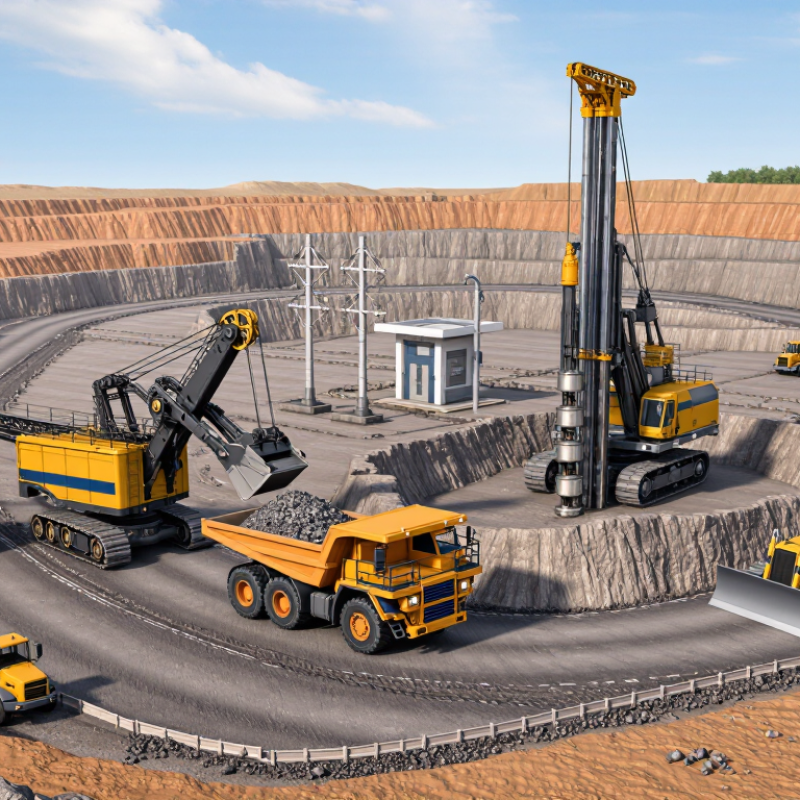
This guide presents ten practical tips for choosing Surface Mining Equipment with fewer expensive surprises. It considers excavators, wheel loaders, haul trucks, drills, dozers, graders, and support machines as one connected system. A larger truck may appear efficient, yet poor road design can erase its advantage. Electric equipment may reduce site emissions, but charging infrastructure can complicate planning. No checklist is perfect. That is worth remembering.

The strongest decision combines supplier evidence, operator feedback, maintenance history, and realistic production modeling. Ask difficult questions. Test assumptions. Review the numbers after each operating season. Reliable Surface Mining Equipment should support safe work, consistent output, manageable costs, and long-term site resilience—not merely impressive specifications.
10 Tips for Choosing Surface Mining Equipment?

Define the Mining Site, Materials, and Operating Conditions

Start with the ground. Define the mining site before comparing equipment specifications. Map bench heights, haul-road widths, gradients, drainage paths, and turning areas. Record rainfall, temperature, altitude, dust, and ground-bearing capacity. A machine that performs well on dry rock may struggle in saturated clay. That difference can damage schedules and increase maintenance pressure.

Material properties deserve equal attention. Measure hardness, density, moisture, fragmentation, and abrasiveness from representative samples. The USGS Mineral Commodity Summaries 2024 estimated global iron ore mine production at 2.5 billion metric tons in 2023. This scale shows why small efficiency losses can become significant costs. The IEA’s Global Critical Minerals Outlook 2024 reported that lithium demand increased by nearly 30% in 2023. Changing material streams may require different loading, crushing, and hauling arrangements.

Match the equipment to the operating conditions, not only to rated capacity. Calculate payload using real road gradients and expected weather interruptions. Check whether tires, tracks, cooling systems, and filtration suit the site environment. Use a field trial when possible. It reveals delays that spreadsheets miss. I have seen planning teams overvalue peak production and undervalue access time. That is an avoidable mistake. Recheck fuel use, cycle time, operator visibility, and service access after the trial. Also document assumptions. Some will be wrong. That is useful, if the review happens before procurement. (Sources: USGS, Mineral Commodity Summaries 2024; IEA, Global Critical Minerals Outlook 2024.)

Match Equipment Capacity to Production Targets and Material Flow

Choosing surface mining equipment starts with the production target, not the machine catalogue. A fleet must match hourly output, material density, haul distance, and loading conditions. The USGS Mineral Commodity Summaries 2024 reported approximately 1.5 billion metric tons of crushed stone produced in the United States during 2023. That scale shows why small capacity errors can become serious bottlenecks. If a crusher processes 1,000 tonnes per hour, feeding it with only 700 tonnes creates idle time and raises unit costs. Measure the actual flow.

Use measured site data rather than optimistic estimates. Record truck payloads, loading times, queue lengths, moisture, and oversize material across several shifts. Then calculate effective capacity, including planned maintenance and weather delays. A practical target often requires 10–20% operational flexibility, but the correct allowance depends on the mine’s variability. The Mine Safety and Health Administration’s 2023 data also reinforces the value of controlled traffic areas and disciplined equipment movement. Capacity is not only tonnes per hour. It is tonnes moved safely and consistently.

A neat spreadsheet can still lie. Field observations matter. Compare loader bucket size with truck body volume, and check whether the primary unit can accept peak feed without starving. The USGS Mineral Commodity Summaries 2024 also recorded nearly 960 million metric tons of U.S. construction sand and gravel production in 2023, illustrating how material type changes equipment demand. Recheck assumptions after the first month. Real production will expose weak estimates.

Evaluate Mobility, Versatility, and Compatibility with Existing Systems

10 Tips for Choosing Surface Mining Equipment

Evaluate Mobility, Versatility, and Compatibility with Existing Systems

Mobility should match the site, not just the equipment brochure. Check turning radius, ground clearance, transport width, and slope performance. A machine that crawls well on compacted haul roads may struggle near uneven benches. Measure access routes before requesting quotations. Narrow gates and weak bridges can turn a capable unit into an expensive obstruction. Keep it practical.

Versatility matters when extraction conditions change. Look for equipment that supports different tools, material sizes, and operating methods. Quick attachment changes can reduce idle time, but only if operators can perform them safely and consistently. Review hydraulic capacity, control layouts, and maintenance access. A dusty cab, crowded service panel, or poor visibility can reduce productivity during long shifts. Small details matter. Ask operators to test the controls, not only supervisors.

Compatibility with existing systems deserves equal attention. Compare electrical loads, fuel infrastructure, communication networks, spare parts, and workshop capabilities. Confirm that new equipment can share data with current monitoring systems without complicated workarounds. Check software updates and technical support arrangements in writing. Integration failures are often overlooked during purchasing. They appear later, during production.

A perfect match rarely exists. Cost models can also miss training time, transport delays, and unexpected downtime. Review operating records from similar ground conditions, then challenge optimistic estimates. I would question any proposal that promises high output without explaining maintenance access. Reliable decisions come from site trials, measurable criteria, and honest discussion of weak points.

Compare Safety Features, Fuel Use, Maintenance, and Total Ownership Cost

Choosing surface mining equipment requires more than comparing purchase prices. In daily field checks, I look for guarded access points, clear visibility, emergency stops, and reliable proximity alerts. Small design faults become serious risks beside a dusty haul road. The ICMM Safety Performance report for 2023 recorded 287 occupational fatalities across member companies in 2022. That figure makes safety evidence more important than attractive specifications. Ask suppliers for verified incident data, inspection records, and operator training requirements. Do not accept vague safety claims.

Fuel use should be measured across your actual loading cycles, gradients, payloads, and idle periods. EPA fuel models provide useful estimates, but they cannot fully represent a steep quarry or frequent short hauls. Maintenance data matters too. The U.S. Department of Energy’s Operations & Maintenance Best Practices Guide reports that predictive maintenance may reduce costs by 8–12% versus preventive maintenance. It can perform better against reactive repairs. Maybe. Sensors still need calibration. I once trusted a neat dashboard that missed repeated hydraulic leaks. Calculate total ownership cost using fuel, tires, labor, parts, downtime, financing, disposal, and training. A cheaper machine can become expensive after one unavailable week. Get service intervals in writing. Then test the figures against twelve months of site records.

Verify Supplier Support, Compliance, and Long-Term Equipment Reliability

10 Tips for Choosing Surface Mining Equipment

Surface equipment must survive dust, vibration, water, and long operating shifts. Supplier support matters as much as rated payload. In field reviews, weak maintenance response often creates larger losses than a higher purchase price. A perfect uptime promise should make you suspicious. The U.S. Mine Safety and Health Administration recorded 40 mining fatalities in 2023, reinforcing the importance of verified safety systems and training.

Tip 1: Check local service coverage. Ask for technician response times, spare-parts locations, and escalation procedures. Tip 2: Request documented compliance evidence for the equipment’s operating region. Tip 3: Review inspection records, software updates, and safety-control testing. Tip 4: Speak with two comparable mine operators. References reveal practical weaknesses.

Reliability requires measurable proof. Tip 5: Compare mean time between failures, planned-maintenance hours, and component life. Tip 6: Demand a clear warranty process, including labor and transport responsibilities. Tip 7: Examine historical parts availability, not only current stock. Deloitte’s Tracking the Trends 2024 identifies operational resilience and digital capability as major mining priorities. Yet digital dashboards cannot repair a machine without trained people. Tip 8: Verify remote-monitoring skills and cybersecurity controls. Tip 9: Test whether maintenance data integrates with existing systems. Tip 10: Calculate lifecycle cost over ten years, including fuel, tires, rebuilds, and downtime.

Do not accept generic reliability percentages. Request site-specific evidence. Mine conditions vary sharply. A supplier may provide excellent equipment but limited field support. That mismatch deserves careful questioning.

10 Tips for Choosing Surface Mining Equipment? - Verify Supplier Support, Compliance, and Long-Term Equipment Reliability
Tip Evaluation Dimension What to Verify Practical Data or Indicator Required Evidence Why It Matters Priority
1 Application and Site Fit Confirm that the equipment matches the material density, bench height, haul-road conditions, gradients, climate, altitude, and operating hours. Compare rated payload, operating weight, breakout force, ground clearance, turning radius, gradeability, and temperature range with site conditions. Site survey, duty-cycle analysis, technical data sheet, and application approval from the supplier. Equipment selected without site-specific testing may suffer from low productivity, excessive component wear, or unsafe operation. Critical
2 Supplier Technical Support Assess the supplier’s ability to provide commissioning, operator training, troubleshooting, field service, and technical documentation. Check service response arrangements, technician coverage, training schedule, diagnostic capability, and escalation procedures. Written service-level agreement, training plan, support contacts, and sample maintenance procedures. Fast and competent support can reduce downtime and help operators use the equipment within its designed limits. Critical
3 Regulatory and Safety Compliance Verify compliance with applicable national mining, machinery safety, electrical, noise, emissions, and occupational health requirements. Review risk assessments, guarding provisions, emergency stops, alarms, lighting, access systems, and required conformity documentation. Declarations of conformity, inspection certificates, safety manuals, risk assessments, and local approval records. Compliance protects workers, supports legal operation, and reduces the risk of delays during inspections or commissioning. Critical
4 Long-Term Reliability Evaluate the design of major wear and powertrain components under the intended duty cycle. Review service history, failure modes, component life assumptions, cooling capacity, structural inspection requirements, and warranty exclusions. Anonymized operating data, reliability reports, failure-analysis records, and warranty terms. Reliability should be judged by documented operating evidence rather than purchase price or marketing claims alone. Critical
5 Maintainability and Access Check whether routine inspection, lubrication, filter replacement, fluid sampling, and component access can be completed safely and efficiently. Compare planned maintenance intervals, access time, isolation points, lifting requirements, inspection points, and common-tool requirements. Maintenance manual, service drawings, preventive-maintenance schedule, and demonstration of key maintenance tasks. Good maintainability shortens planned downtime and reduces the chance that essential inspections will be skipped. High
6 Parts Availability and Supply Chain Verify the availability of critical spare parts, consumables, wear components, and emergency replacement items. Review lead times, local stock arrangements, approved alternatives, obsolescence controls, and recommended start-up inventory. Parts catalogue, stocking proposal, lead-time schedule, logistics plan, and parts-support agreement. Even reliable equipment can remain idle if critical parts are unavailable when failures occur. High
7 Lifecycle Cost Calculate the total cost of ownership instead of comparing acquisition price alone. Include fuel or energy use, tires or undercarriage, scheduled maintenance, labor, consumables, major rebuilds, training, transport, and disposal. Transparent cost model, consumption assumptions, maintenance estimates, warranty coverage, and rebuild intervals. A lifecycle-cost view supports a more accurate comparison between equipment alternatives and operating strategies. High
8 Performance Monitoring and Diagnostics Determine whether the equipment can provide useful operating, condition, and fault information without compromising data governance. Check availability of hour meters, fault codes, fuel or energy data, payload records, temperature trends, inspection alerts, and secure data export. Dashboard demonstration, data dictionary, connectivity requirements, cybersecurity controls, and reporting examples. Accurate operating data helps identify abnormal conditions, improve maintenance planning, and verify productivity assumptions. High
9 Environmental and Operator Conditions Verify performance in dust, vibration, heat, cold, rain, poor visibility, and other conditions present at the mine. Review filtration, sealing, cooling, cab protection, visibility systems, ergonomics, noise control, and climate-control capability. Environmental operating limits, test results, cab specifications, operator feedback, and site trial records. Equipment that is unsuitable for the working environment may experience accelerated wear and reduced operator productivity. High
10 Acceptance Testing and Contract Protection Define measurable acceptance criteria before purchase and link them to commissioning, warranty, and corrective-action processes. Specify test duration, payload or production conditions, availability calculation method, safety checks, defect response time, and retest rules. Signed acceptance protocol, performance test procedure, warranty schedule, defect log, and escalation terms. Clear contractual measures convert technical expectations into verifiable obligations after delivery. Critical
Note: Compliance requirements, operating limits, maintenance intervals, and performance targets should be confirmed against the mine’s jurisdiction, site conditions, equipment configuration, and applicable manufacturer documentation.