Call Today: 916-259-1868

10 Tips for Buying Powder Coating Equipment

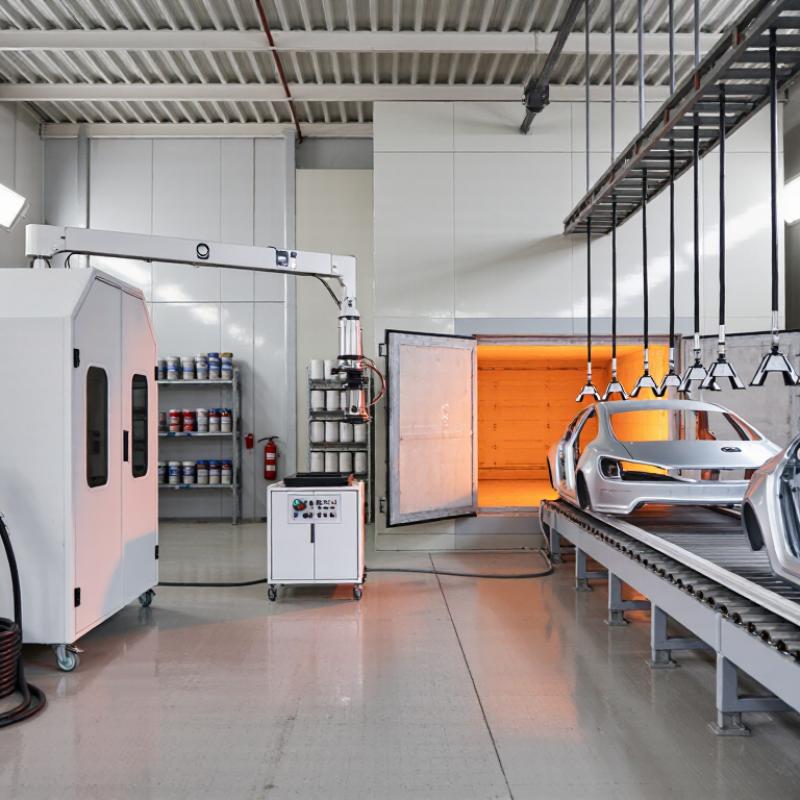
Buying Powder Coating Equipment is not simply a matter of choosing the lowest quoted price. The right system must match your products, workspace, production volume, and finishing expectations. A small fabrication shop may need a compact manual booth, while an automotive supplier may require automated guns, recovery equipment, and a larger curing oven. The difference appears in daily details: stable airflow, clean hooks, even coverage, and reliable temperature control.

This guide presents ten practical tips for evaluating equipment before signing an order. It considers booth size, spray-gun performance, powder recovery, oven heat distribution, electrical requirements, grounding, maintenance access, and operator safety. Experienced coaters know that a beautiful sample panel can hide costly weaknesses. Ask how the oven performs at the load temperature, not only when empty. Check whether replacement filters and wear parts are readily available. Request service records or customer references when possible.

Small details matter.

A lower purchase price may seem attractive, yet weak airflow or uneven curing can create rework, wasted powder, and customer complaints. Still, no checklist is perfect. Production needs can change, and equipment estimates may prove optimistic after installation. Careful buyers should leave room for future growth and confirm technical claims with measurable data. Reliable suppliers explain limitations clearly, provide documented specifications, and support training after delivery. With disciplined comparison and a willingness to question convenient assumptions, this guide can help identify equipment that performs consistently rather than merely looking impressive in a showroom.
10 Tips for Buying Powder Coating Equipment

Define Your Powder Coating Production Requirements

Defining production requirements is the real starting point when buying powder coating equipment. A 2024 MarketsandMarkets report forecasts the global powder coatings market to reach about USD 17.9 billion by 2028, with annual growth near 6.5%. Growth alone does not justify a larger line. Measure your actual workload first. Record parts per hour, maximum dimensions, average weight, substrate type, powder chemistry, and target film thickness. A small cabinet may suit occasional batches, but it can restrict expansion.

Write down the production rhythm. Include daily operating hours, color changes, curing temperatures, and acceptable rework rates. The U.S. Environmental Protection Agency describes powder coating as a process with little or no solvent-related VOC emissions. However, that benefit depends on proper application and curing. Ask suppliers for booth airflow, reclaim efficiency, oven uniformity, and electrical-load data. Check whether the conveyor speed matches your required cure time. It sounds basic. It is often missed.

Your floor plan matters as much as the spray gun. Leave space for loading, cooling, inspection, maintenance, and safe powder storage. Calculate powder use from part surface area, film thickness, and transfer efficiency. Do not rely only on optimistic supplier estimates. The first calculation may be wrong. Recheck it against three months of production records. A 2023 Grand View Research report valued the powder coatings market at over USD 15 billion, but market growth cannot repair poorly defined requirements. Choose capacity for your real parts, not an impressive brochure number.

Compare Equipment Types, Capacities, and Application Methods

Buying powder coating equipment starts with the application method, not the machine price. Manual electrostatic guns suit prototypes, repairs, and low-volume batches. Automatic reciprocators improve consistency on repeated panels and frames. A booth with reclaim equipment can reduce powder waste, but only when colors change infrequently. The Powder Coating Institute reports transfer efficiency can exceed 95% under controlled conditions. Real workshops often achieve less. Operator technique matters.

Compare booth capacity with your largest part, not your average part. Measure length, height, hook spacing, and oven clearance. A narrow oven may create uneven curing near crowded loads. Batch ovens fit mixed production and changing schedules. Conveyorized ovens support higher throughput but require steady loading and floor space. Energy use also deserves attention. The U.S. Department of Energy identifies industrial process heating as a major manufacturing energy demand, so insulation and airflow deserve inspection.

Application requirements should guide the gun, booth, and powder recovery system. Fine textures may need different voltage settings than smooth coatings. Ask suppliers for test panels using your actual substrate and geometry. Check coating thickness, reclaim ratio, color-change time, and curing records. Grand View Research’s 2024 market report estimates the global powder coatings market reached about 15.9 billion dollars in 2023. Growth does not guarantee a suitable machine. I once underestimated cleaning time between colors. That mistake was expensive. Build capacity around realistic shifts, maintenance access, and the operator’s daily habits.

Powder Coating Equipment: Typical Capacity by Application Method

Capacity depends on part size, coating thickness, color changes, curing time, and operator skill. The figures below show common planning ranges for representative equipment configurations, expressed as parts per hour.

How to read this chart: Manual batch systems offer flexibility for low-volume or frequently changing work. Conveyorized booths and reciprocating automatic systems provide higher throughput, while multi-axis automatic lines are best suited to consistent, high-volume production.

Evaluate Spray Guns, Booths, Ovens, and Recovery Systems

10 Tips for Buying Powder Coating Equipment
Evaluate Spray Guns, Booths, Ovens, and Recovery Systems

Buying powder coating equipment requires more than comparing prices. Start with the parts you coat, expected batch size, and available floor space. I have seen efficient lines fail because the oven was too small. Measure the longest part, rack clearance, and loading path. Leave room for maintenance.

Evaluate spray guns by control, balance, and powder output stability. A comfortable handle matters during long production runs. Check grounding, cable protection, and adjustment range. Ask for test panels using your actual powder. Gloss can hide uneven coverage. Record film thickness at edges, corners, and recessed areas. Do not trust one attractive sample.

The booth should provide steady airflow without disturbing the powder cloud. Inspect access doors, lighting, filters, and cleaning time. Recovery systems need suitable separation and simple contamination control. Fast color changes sound appealing, but awkward ducting can waste hours. For the oven, verify temperature uniformity at several points, not only the display. Test a full load, then compare cure results. I once underestimated rack mass; the heating cycle became inconsistent. That mistake changed my buying checklist. Choose documented service support, clear safety procedures, and spare parts you can obtain reliably. Plan for tomorrow’s workload, not only today’s budget.

10 Tips for Buying Powder Coating Equipment - Evaluate Spray Guns, Booths, Ovens, and Recovery Systems
Tip Equipment Area Evaluation Metric Typical Reference Range What to Check Before Buying Why It Matters
1 Spray Gun Electrostatic charging technology Corona or tribo charging; adjustable output Confirm that voltage, current, powder flow, and atomizing air can be adjusted independently. Review whether the controls support repeatable settings for different powder types. Stable charging improves transfer efficiency, coating consistency, and coverage on edges, recesses, and complex geometries.
2 Spray Gun Powder delivery performance Approximately 50–450 g/min, depending on gun and powder Ask for the usable delivery range at the required film thickness and production rate. Check whether the powder pump can maintain a steady feed during long operating periods. A suitable delivery range prevents overspray, reduces application time, and allows the same system to handle both small parts and larger batches.
3 Spray Gun Film-thickness control Common powder coatings: approximately 50–120 micrometers Verify that the system can produce consistent thickness across flat surfaces, corners, and recessed areas. Include a calibrated dry-film-thickness gauge in the quality-control plan. Consistent thickness supports corrosion protection, appearance, curing performance, and efficient powder consumption.
4 Spray Booth Airflow and containment Often designed around 0.4–0.6 m/s capture velocity at openings Request airflow calculations, booth opening dimensions, pressure readings, and filter-loading limits. Confirm that the design contains powder without creating excessive turbulence. Balanced airflow protects workers, limits powder migration, improves housekeeping, and supports reliable recovery-system operation.
5 Spray Booth Booth construction and cleanability Smooth, grounded surfaces with minimal powder traps Evaluate interior seams, corners, lighting protection, grounding points, access doors, and the time required for color changes. Avoid designs with unnecessary ledges or difficult-to-clean cavities. Easy cleaning reduces color-change downtime, cross-contamination, maintenance labor, and the risk of unwanted inclusions in the finish.
6 Curing Oven Temperature uniformity Common target: within approximately ±5–10°C throughout the working zone Require a temperature-mapping test using multiple sensors at representative load positions. Confirm the working-zone dimensions rather than relying only on the external oven size. Uniform temperature helps prevent under-cured areas, over-baking, gloss variation, poor adhesion, and reduced coating durability.
7 Curing Oven Cure schedule and heat-up capability Many powders cure at about 160–200°C metal temperature for 10–20 minutes Match the oven profile to the powder technical data sheet and the actual part mass. Check heat-up time, conveyor speed, dwell time, insulation quality, and recovery after door opening. Correct metal temperature and dwell time are essential for mechanical performance, chemical resistance, and repeatable production results.
8 Recovery System Recovery efficiency and filtration A well-designed system can recover a high proportion of usable overspray; efficiency varies by powder and setup Review filter type, final-filter rating, differential-pressure monitoring, automatic cleaning, waste discharge, and the procedure for separating or disposing of contaminated powder. Effective recovery lowers powder waste and operating cost while reducing airborne emissions and maintenance interruptions.
9 Material Handling Part size, weight, and conveyor capacity Specify maximum part envelope, load weight, hanger spacing, and line speed Compare the equipment's usable dimensions with the largest planned parts, including clearance for hooks and fixtures. Confirm conveyor load ratings, speed adjustment, and grounding through the hanger system. Correct sizing prevents bottlenecks, improves transfer efficiency, avoids collision damage, and leaves capacity for future production changes.
10 Safety and Service Electrical safety, grounding, and maintainability Use applicable local electrical, fire, dust, and occupational-safety requirements Check grounding continuity, interlocks, emergency stops, ventilation, dust-control measures, inspection access, spare-parts availability, documentation, and operator training. A compliant, serviceable system reduces ignition and exposure risks, improves uptime, and supports safer long-term operation.

Check Quality, Safety Features, Energy Use, and Maintenance Needs

Buying powder coating equipment requires more than comparing spray capacity or purchase price. Quality appears in small details: even airflow, stable temperature, durable seals, and consistent coating thickness. Ask for test results, material specifications, and service records. Inspect welds, doors, cable protection, and powder recovery paths before signing. I prefer a live demonstration using a sample part. It exposes weak controls quickly. Cheap components can become expensive interruptions.

Safety features deserve direct testing, not brochure reading. Confirm reliable grounding for the booth, gun, workpiece, and operator area. Check that doors, fans, and high-voltage systems use working interlocks. Emergency stops should be easy to reach and clearly labeled. Ventilation must control airborne powder and support the site’s risk assessment. A qualified technician should verify installation against applicable local requirements. I once saw an operator ignore a loose ground clamp. The finish looked acceptable. The risk was not.

Energy use is often hidden in oven warm-up and idle time. Compare kilowatt-hours per batch, heat recovery, insulation quality, and standby controls. Ask whether the oven can hold temperature without constant burner cycling. Maintenance needs should be practical: accessible filters, simple gun cleaning, replaceable seals, and clear fault codes. Request a maintenance schedule with expected replacement intervals. Leave room for doubt. Supplier estimates may assume perfect loading and spotless filters. Record actual energy and repair time after installation, then adjust your buying decision accordingly.

Assess Supplier Support, Total Cost, and Future Expansion Options

Buying powder coating equipment is a capacity decision, not only a machine purchase. Grand View Research valued the global powder coatings market at about USD 13.3 billion in 2023 and expects continued growth through 2030. That growth can make expansion attractive, but demand forecasts are not production schedules. Tip 1: Ask suppliers for installation records, response times, and spare-parts availability. Tip 2: Require operator training, troubleshooting guides, and remote support terms in writing.

Compare total cost, not the equipment invoice. Energy, compressed air, filters, hooks, maintenance, labor, and downtime can quietly exceed the initial price. The U.S. Department of Energy notes that compressed-air leaks can waste 20–30% of compressor output in poorly maintained systems. That is expensive air. Tip 3: Request an energy estimate based on your oven size, operating hours, and local utility rates. Tip 4: Calculate coating utilization and reclaim performance using your actual part mix, not a showroom sample.

Future expansion deserves equal attention. Check whether the control system can record temperature profiles, fault history, and production data. Confirm whether the oven, booth, and conveyor can accept added capacity without major rebuilding. Tip 5: Ask for a phased layout with reserved floor space, electrical load, ventilation capacity, and safe access routes. The uncomfortable truth is that “modular” sometimes means limited. A smaller line may be wiser today, yet costly tomorrow. Review assumptions with an independent engineer before signing. Sources: Grand View Research, Powder Coatings Market Size Report, 2024; U.S. Department of Energy, Improving Compressed Air System Performance.