How to Choose an Anchor Flange for Pipelines?
Choosing an Anchor Flange Pipeline component is not a catalogue exercise. It is a load-path decision. Pressure, thermal expansion, bending, soil friction, and surge forces must be evaluated together. Small details matter. A flange may look oversized yet remain unsuitable when the concrete block, weld, or nearby elbow cannot transfer the force safely.
The American Society of Civil Engineers reported in its 2021 Infrastructure Report Card that the United States operates more than 2.2 million miles of drinking-water pipelines and over 2.6 million miles of gas distribution pipelines. These figures show the scale of buried infrastructure and the consequences of weak connection design. PHMSA incident data also demonstrate why leakage prevention, material traceability, and inspection access deserve attention during selection. ASME B31.4, ASME B31.8, and ASME B16.5 provide essential design and dimensional references, but standards do not replace project-specific engineering.
Dr. Andrew Cosham, known for his pipeline buckling and integrity research, states, “Soil-pipe interaction must be treated as part of the pipeline, not as an afterthought.” That principle applies directly to anchor flange selection. Engineers should verify axial capacity, flange rating, bolt preload, weld detail, corrosion allowance, and restraint geometry. Loads travel. A neat selection can still be wrong. I would not pretend that one flange type fits every route, pressure class, or ground condition. The better approach combines field experience, verified calculations, manufacturer data, and independent review. This guide explains how to make that decision with fewer assumptions and clearer evidence.
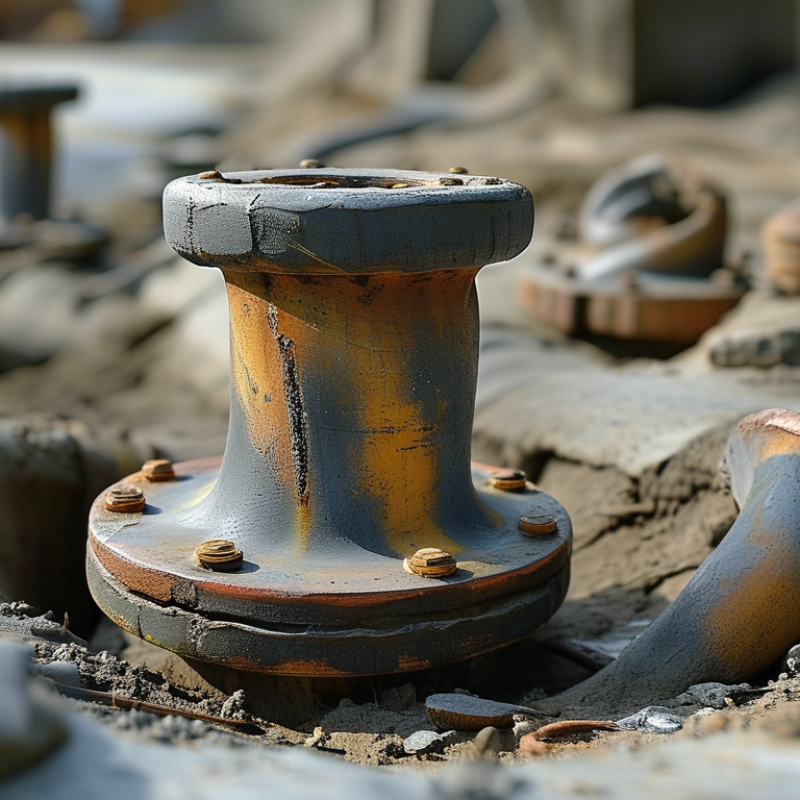
Define the Purpose and Function of an Anchor Flange
An anchor flange is a fixed point in a pipeline system. Its purpose is to control axial movement, not merely to join two pipes. It transfers pressure thrust, thermal forces, and occasional operating loads into a supporting structure. It holds position.
This function matters near bends, valves, reducers, closed ends, and changes in pipe direction. Without proper restraint, internal pressure can push the pipe along its route. Temperature changes may also cause expansion, contraction, or unwanted stress at nearby joints.
A correctly selected anchor flange limits this movement and protects connected equipment, supports, and flexible components.
Selection should begin with the actual duty of the pipeline.
Review design pressure, temperature range, pipe size, material, wall thickness, and expected load combinations. The flange must match the pipe connection and the surrounding anchoring arrangement.
Civil and piping engineers should verify bolt loads, weld details, foundation capacity, and corrosion conditions. Site experience helps here. Small alignment errors can become serious after commissioning.
It is not a magic clamp.
Do not choose an anchor flange only by nominal diameter or pressure class.
That approach seems efficient, but it can overlook thermal movement and support stiffness. In some installations, the restraint becomes stronger than the structure carrying it.
The flange may survive while the concrete or weld does not. Rechecking the complete load path is therefore essential, especially where vibration, water hammer, or repeated temperature cycles are expected.
Assess Pipeline Pressure, Temperature, and Material Requirements
How to Choose an Anchor Flange for Pipelines?
Selecting an anchor flange starts with the pipeline’s design pressure and operating temperature. Do not rely only on the normal working pressure. Include pressure surges, pump starts, valve closures, and possible vacuum conditions. The flange rating must remain suitable at the highest metal temperature, not just at room temperature.
Material selection needs equal attention. Match the flange material with the pipe, process fluid, and surrounding environment. Check corrosion resistance, thermal expansion, weldability, and low-temperature toughness. A corrosion allowance may be necessary in wet, chemical, or marine service. Gaskets and bolts must also tolerate the same pressure and temperature range. Small mismatches can create large maintenance problems.
An anchor flange transfers axial forces into a support or concrete structure. Calculate thrust from pressure changes, bends, reducers, and thermal movement before choosing its dimensions. Review bolt loads, weld details, anchor-bolt capacity, and support stiffness with a qualified engineer. Field inspections often find that the original temperature assumption was too optimistic. That happens. Recheck operating records and transient conditions before fabrication. A thicker flange is not automatically safer if the connected pipe or anchors remain weak. Clear drawings, traceable material certificates, and documented calculations make the final selection easier to verify.
How to Choose an Anchor Flange for Pipelines?
Compare the pipeline design pressure and temperature before selecting an anchor flange. The pressure class shown is a preliminary screening level; final selection must verify the applicable pressure-temperature rating, flange material group, corrosion allowance, bolt requirements, weld design, and local piping code.
The operating cases below represent common engineering service conditions. Carbon steel is suitable for many water, gas, and hydrocarbon services, while alloy steel is preferred for elevated-temperature steam and process lines. Material compatibility must be confirmed against the fluid, temperature, and corrosion environment.
Select the Correct Flange Size, Rating, and Connection Type
How to Choose an Anchor Flange for Pipelines?
Select the Correct Flange Size, Rating, and Connection Type
Choosing an anchor flange starts with the pipe’s actual outside diameter, not only its nominal size. Measure the pipe in the field when possible. Small differences can cause poor alignment, uneven welding, or gasket stress. Match the flange bore, bolt circle, and facing dimensions carefully. An oversized bore may disturb flow, while a restricted bore can increase pressure loss. Field details matter here.
The pressure rating must reflect more than normal operating pressure. Check design pressure, temperature, corrosion allowance, and temporary surge loads. Water hammer is easy to overlook. It can create forces that exceed routine pipeline conditions. Use the governing piping code and verified material data during selection. A catalog table helps, but it should not become the final decision.
Connection type affects strength, installation time, and inspection access. Butt-welded connections often provide a reliable load path for heavy axial restraint. Slip-on connections may simplify fit-up, but their weld details require careful review. Threaded connections are usually unsuitable for severe anchor loads. Confirm the gasket type, bolt material, and flange facing together. One common mistake is selecting the flange first and checking compatibility later. That approach looks efficient, but it often creates rework. I would also review anchor loads with the structural team, because pipe stress and concrete support cannot be separated.
Check Anchor Loads, Structural Support, and Installation Conditions
Choosing an anchor flange starts with loads, not flange size. Calculate pressure thrust, thermal expansion, operating weight, and occasional bending. Consider test pressure too. A restrained line can transfer large axial forces into the flange and supporting structure. Use the governing load case, not only normal operation. Practical reviews often reveal failures caused by overlooked hydrostatic testing.
The flange needs a reliable structural path into concrete, steel, or a reinforced equipment base. Check bolt tension, shear, bearing, welds, and local wall stresses. Confirm that the support can accept combined loads without excessive movement. A pipe stress engineer and structural engineer should review the interface together. This coordination is often missed.
Installation conditions can change the design. Verify access for bolt tightening, flange alignment, gasket placement, and drainage. Leave room for inspection tools. Keep sealing surfaces clean during lifting. Measure the actual pipe position before final welding. Field dimensions are not always perfect. Temporary supports may be needed until anchors and guides are complete. Check temperature, settlement, vibration, and corrosion exposure at the site. Small details matter.