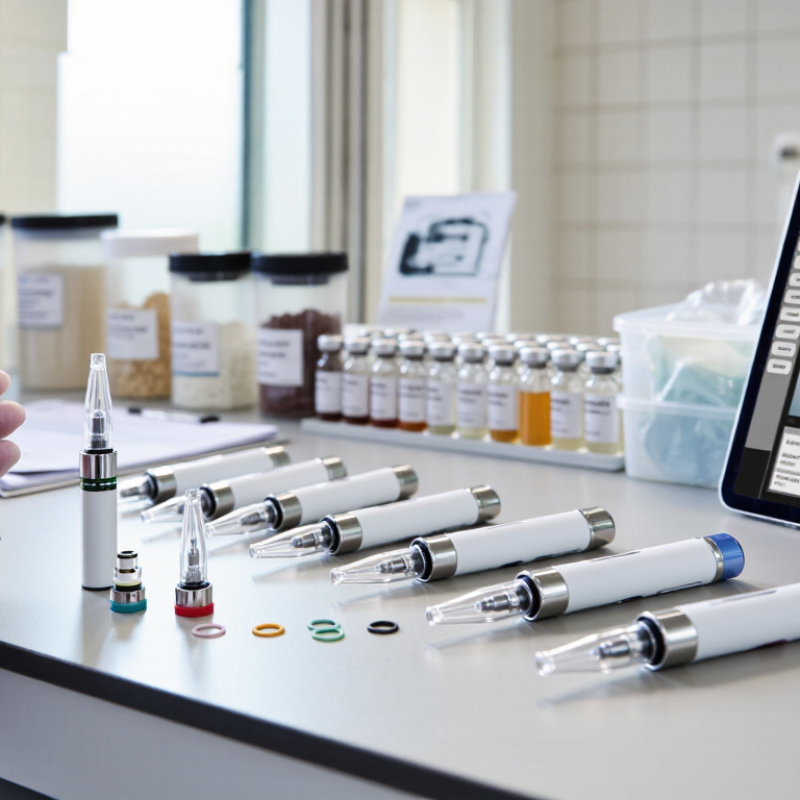
Choosing a Flavored Air Pen supplier requires more than comparing prices and colorful product samples. The supplier must demonstrate reliable manufacturing, transparent materials, and responsible product documentation. A professional evaluation should begin with the intended market, permitted ingredients, and applicable product regulations. Requirements may differ between countries and regions. Therefore, avoid suppliers who promise worldwide compliance without evidence.
Ask for material specifications, ingredient disclosures, batch records, and independent laboratory testing where appropriate. Pay attention to the mouthpiece, housing, seal, and packaging. These small parts reveal manufacturing discipline. A sample should feel consistent, with clean assembly and clear labeling. Do not accept vague claims such as “completely safe” or “universally approved.” Testing supports confidence, but it does not replace local regulatory review. An experienced supplier should explain limitations honestly.
Communication also matters. Request production timelines, minimum order quantities, quality-control procedures, and after-sales support in writing. A factory visit or third-party audit can provide useful evidence, especially when ordering at scale. Check whether the supplier can manage traceability from raw materials to finished units. Product development may include adjustments to flavor profiles, airflow, packaging, and user instructions. Keep those changes documented.
No checklist is flawless. A polished website can still hide weak production controls. Conversely, a smaller supplier may offer stronger attention to detail. Review references carefully, compare test documents, and begin with a controlled sample order. Choose the partner that protects product consistency, legal compliance, and customer trust—not merely the lowest quotation.
How to Choose a Flavored Air Pen Supplier?
Define Your Flavored Air Pen Product Requirements
Before contacting suppliers, write a precise product brief. Define the intended user, flavor profile, airflow strength, size, weight, and daily usage pattern. A light citrus note may suit office use, while a stronger mint profile may feel excessive indoors. Test both.
My first specification was too vague. I requested “a pleasant flavor” and received samples with different intensity, cooling effects, and aftertastes. That created unnecessary revisions. Specify flavor concentration, ingredient standards, and acceptable sensory limits. Ask for ingredient lists, safety data, batch records, and independent testing where relevant.
Keep the design practical. Decide whether the pen needs a rechargeable battery, replaceable cartridge, child-resistant packaging, or a simple non-heated airflow system. Materials should be clearly identified, especially for mouth-contact components. Request leak, drop, odor, and repeated-use tests. A supplier should explain its quality process, not just display polished samples. Documentation matters.
Ask for realistic production details. Confirm minimum order quantities, prototype fees, lead times, packaging options, and defect-handling procedures. Request samples from more than one batch. One sample can hide inconsistency. Do not accept unsupported claims about wellness, safety, or performance. Requirements may change after user testing, and that is normal. Leave room for adjustment without weakening compliance or product quality.
| Requirement Dimension | Recommended Product Specification | Why It Matters When Choosing a Supplier | Evidence to Request | Suggested Acceptance Criteria |
|---|---|---|---|---|
| Product Type | Non-heated flavored air inhaler with no combustion and no nicotine. | The product definition determines the applicable safety, labeling, testing, and market-entry requirements. | Product description, technical drawings, ingredient statement, and intended-use declaration. | Specification clearly excludes tobacco, nicotine, combustion, and unauthorized therapeutic claims. |
| Flavor Profile | Start with 3–5 flavors, such as mint, citrus, berry, vanilla, or coffee, depending on the target market. | A focused initial range simplifies quality control, inventory planning, and consumer testing. | Flavor samples, formulation summary, allergen declaration, and sensory evaluation records. | Consistent flavor, no off-odor, and no material change after storage testing. |
| Ingredients and Materials | Food-contact or inhalation-suitable materials selected according to the intended route of exposure; avoid undisclosed additives. | Material transparency supports safety assessment and reduces contamination or migration risks. | Full bill of materials, safety data sheets, certificates of analysis, and material declarations. | Traceable materials with documented composition and batch-level quality records. |
| Airflow and Draw | Smooth mouth-to-lung draw with a target airflow range of approximately 0.8–2.0 L/min, subject to product design. | Consistent airflow affects comfort, flavor delivery, and perceived product quality. | Airflow test method, measurement results, tolerance limits, and production inspection records. | At least 95% of sampled units remain within the approved airflow tolerance. |
| Puff or Use Count | Define a target of 300–600 standard draws for a single-use format, or specify a refillable design with a defined service life. | A clearly defined use count supports accurate labeling, pricing, and customer expectations. | Puff-count protocol, test conditions, sample size, and end-of-life definition. | Results are repeatable and the stated use count is supported by documented testing. |
| Dimensions and Ergonomics | Typical compact format: approximately 90–130 mm long, 10–18 mm wide, and below 30 g, subject to the final design. | Size and weight influence portability, shelf presentation, packaging cost, and user comfort. | Dimensioned drawings, 3D files, production samples, and drop-test results. | Final samples match approved drawings within agreed manufacturing tolerances. |
| Leakage and Structural Integrity | Sealed construction with no visible leakage during storage, transport simulation, or normal use. | Leakage can create safety concerns, product returns, packaging damage, and poor consumer confidence. | Leak test procedure, temperature-cycle results, vibration testing, and packaging validation. | Zero leakage in the agreed sample set under defined test conditions. |
| Packaging and Labeling | Tamper-evident, moisture-resistant packaging with ingredients, lot code, net contents, use instructions, warnings, and disposal guidance. | Labeling and packaging requirements vary by destination and product classification. | Packaging artwork, regulatory review checklist, barcode specification, and carton test report. | Artwork is approved for each destination market before mass production. |
| Quality Control | Documented incoming-material inspection, in-process checks, final inspection, and retained samples. | A repeatable quality system is more reliable than visual inspection alone. | Quality manual, inspection standards, corrective-action records, and batch release procedure. | Every batch has a traceable lot number and documented release decision. |
| Testing and Compliance | Testing plan aligned with the destination market, including chemical, microbiological, packaging, and product-safety assessments where applicable. | Compliance obligations depend on ingredients, intended use, claims, and local regulations. | Current third-party laboratory reports, conformity documents, and regulatory assessment records. | Reports identify the tested product, lot, method, date, and applicable acceptance limits. |
| Shelf Life and Storage | Set a validated shelf-life target of 12–24 months, with storage guidance such as a cool, dry location away from direct sunlight. | Flavor intensity, packaging integrity, and material stability can change over time. | Accelerated-aging study, real-time stability data, and storage-condition recommendations. | No unacceptable change in odor, appearance, leakage, or performance before expiry. |
| Customization | Define customization for flavor, color, mouthpiece, packaging, instructions, and minimum order quantity. | Customization may affect tooling, lead time, testing, documentation, and unit cost. | Customization matrix, prototype timeline, tooling quotation, and change-control process. | All approved changes are documented and linked to a controlled product revision. |
| Supplier Capability | Select a supplier that can provide stable production capacity, transparent documentation, quality support, and reliable export packaging. | Supplier capability affects continuity of supply, defect rates, response time, and total landed cost. | Factory audit information, production capacity statement, lead-time data, sample records, and customer-service process. | Supplier passes technical, quality, documentation, communication, and delivery evaluations before approval. |

© 2024 Sierramotion. All Rights Reserved