How to Choose the Best Water Spray Gun for Your Needs
Choosing the best Water Spray Gun starts with the jobs you actually do, not the most impressive product description. A gun used to rinse garden tools has different needs from one used to water delicate seedlings or wash a patio. The right choice should feel comfortable in your hand, connect securely to your hose, and offer a spray pattern suited to the task. Small details matter. A stiff trigger can become tiring during a long watering session, while a loose connector may leave water dripping near your feet.
Before comparing models, consider your water pressure, hose size, and typical use. Adjustable patterns can be useful, but a simple, reliable nozzle may be better if you only need a steady shower or gentle mist. Higher pressure is not automatically an advantage; it can disturb soil, damage tender leaves, or splash dirt onto nearby surfaces. Easy to clean. Easy to control. Those qualities often matter more than extra settings. It is tempting to focus on price or a long list of features, but neither guarantees a comfortable fit or dependable performance. I may be overthinking the grip, yet it is the part you touch every time. This guide looks at spray patterns, materials, fittings, comfort, and value, helping you compare options with practical needs in mind. No single gun suits everyone, and an honest choice begins with knowing what you need it to do.
Define the Task: Match the Spray Gun to Watering, Rinsing, or Cleaning
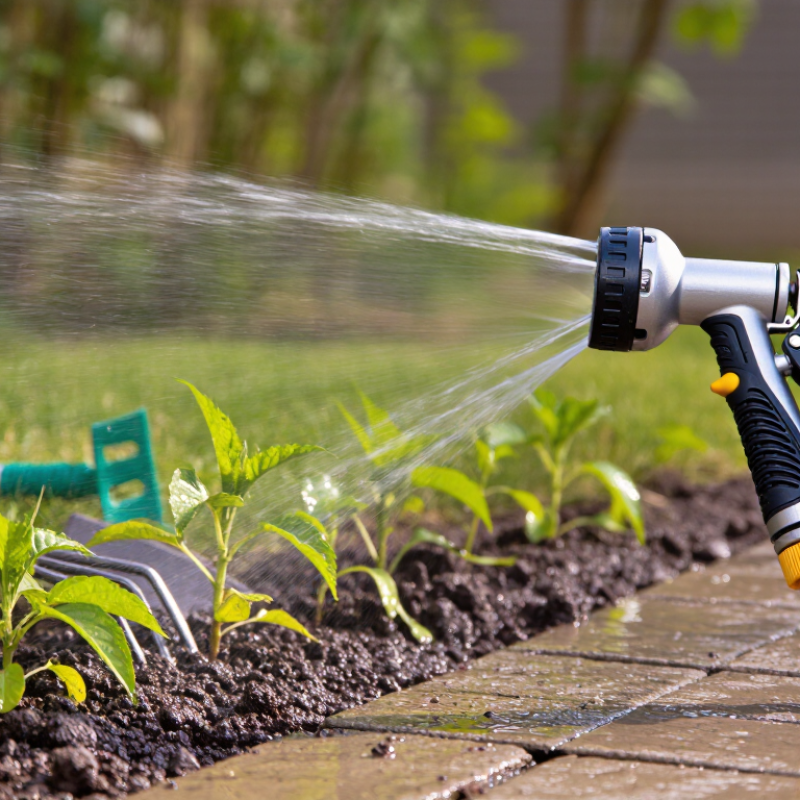
When choosing a water spray gun, start with the job, not its appearance. Watering delicate plants requires a gentle mist or soft shower pattern. Strong jets can bruise leaves, disturb soil, and expose shallow roots. A comfortable trigger also matters during long watering sessions. Choose a model with adjustable flow, especially when moving between seedlings and mature plants. I once used a powerful setting for small herbs. That shortcut was a mistake.
Rinsing outdoor furniture, bicycles, or muddy tools needs broader coverage. A fan-shaped spray can remove loose dirt quickly without wasting excessive water. Look for a stable grip and an easy-to-reach control lever. Wet hands make stiff controls frustrating. Short bursts usually work better than holding the trigger continuously. The right spray angle can also reduce splashing against walls, shoes, and nearby plants. Test the pattern against an empty surface before rinsing delicate materials.
Cleaning requires more force, but maximum pressure is not always better. A focused jet may damage painted surfaces, soft wood, or fragile seals. Use adjustable settings and begin with the lowest effective flow. Check the connection, trigger, and nozzle for leaks before regular use. A metal body may feel durable, while a lighter material can reduce hand fatigue. Neither choice is automatically superior. Your task, water pressure, and working time decide the better fit. Consider a filter when your water contains visible particles. Small debris can affect spray consistency. Practical testing remains essential, because advertised settings may feel different in your hands.
Check Supply Pressure: Many residential systems operate at 40–60 psi
Before choosing a water spray gun, check the pressure at the outdoor tap. Many residential systems operate at 40–60 psi, but your reading may differ. Screw a pressure gauge onto the faucet and read it with other water fixtures turned off. That gives you a useful baseline. Now run the tap and check again; pressure can fall when water is flowing.
The hose changes things. A long, narrow hose, a kink, or several connectors can reduce pressure before water reaches the gun. Match the gun’s recommended operating range to your actual setup, not just the number on a home pressure gauge. Small detail, big difference. If the spray feels weak, check for leaks or blockages before assuming the household supply is at fault.
More pressure is not always better. A concentrated jet can strip soft paint, damage delicate leaves, or scatter soil from a garden bed. I’d start with a wider spray setting and test it on an out-of-the-way surface. It is easy to overfocus on the gauge; flow and spray pattern matter too. If your running pressure sits well below the gun’s stated range, choose a model designed for lower pressure rather than forcing a mismatch.
How to Choose the Best Water Spray Gun for Your Needs – Check Supply Pressure: Many residential systems operate at 40–60 psi
| Spray Gun Type | Typical Supply Pressure | Approx. Flow at 50 psi | Best For | What to Check Before Buying |
| Adjustable-pattern hose nozzle | About 20–80 psi | About 1–5 gal/min | General watering, rinsing, and everyday outdoor tasks | A pattern selector, a comfortable trigger, and a secure fit for your hose |
| Fan-spray nozzle | About 20–60 psi | About 1–3 gal/min | Gently watering seedlings, flowers, and delicate plants | A broad, even spray and a low-flow setting to reduce soil disturbance |
| Shower-pattern nozzle | About 20–60 psi | About 1–4 gal/min | Watering garden beds and containers with a softer stream | A gentle, consistent spray; avoid unnecessarily high pressure around young plants |
| Jet-pattern nozzle | About 30–80 psi | About 1–3 gal/min | Rinsing hard surfaces and reaching farther distances | A controllable stream and a pressure rating suitable for your water supply |
| High-flow rinse nozzle | About 30–80 psi | About 3–6 gal/min | Fast rinsing where a larger volume of water is more useful than a fine spray | Whether the faucet, hose, and available flow can support the higher water demand |
Pressure and flow figures are general estimates, not guaranteed product specifications. Actual flow depends on nozzle design, hose length and diameter, fittings, and pressure while water is running. Residential systems commonly operate around 40–60 psi; check dynamic pressure at the hose outlet when possible.
Compare Flow Rates: Check the Gun’s Rated GPM at the Specified Pressure
When choosing a water spray gun, study its rated gallons per minute, or GPM, at the specified pressure. Flow rate tells you how much water leaves the nozzle each minute. Pressure tells you how forcefully it leaves. These measurements work together, but they are not interchangeable.
A gun rated at 5 GPM at 60 PSI may deliver much less flow at 40 PSI. Compare products using the same pressure rating. Pressure changes everything. I once chose a high-GPM gun without checking my supply pressure. The spray felt weak, and the extra capacity existed only on paper. That mistake taught me to read the full specification, not just the largest number.
Match the flow rate to the task and your water source. Light rinsing may need roughly 2–4 GPM, while moving mud from large surfaces can require more. A higher GPM can clean faster, but it may empty a small tank quickly. Check your hose diameter, pump capacity, and available pressure before buying. If possible, measure actual output with a flow meter or a timed container test. Real conditions can differ from published figures. Nozzle shape also matters: a narrow stream often feels stronger, while a wider fan covers more area with the same supply. Test the gun briefly, because comfort and control are easy to underestimate.
Verify Hose Fit: ASME B1.20.7 Covers Garden-Hose Thread Dimensions
Before choosing a spray gun, check the thread, not just the nozzle shape. Many U.S. garden hoses use 3/4-inch NH, also called 3/4-11.5, with 11.5 threads per inch. ASME B1.20.7 specifies hose-coupling screw-thread dimensions, but it does not make every regional connector interchangeable. Check the product details or measure the fitting carefully. Nominal size can mislead. Look for a flat washer inside the swivel, too: the threads hold the parts together, while the washer usually forms the seal.
A mismatch may feel subtle. The gun can start threading, then bind, wobble, or leak at the joint. Do not force it; cross-threading can damage fittings. The USGS report Estimated Use of Water in the United States in 2015 puts irrigation withdrawals at about 118 billion gallons per day. That figure is not specific to garden hoses, but it underlines the value of reliable outdoor water control. Choose a gun with a clearly stated thread specification, then test the connection over a bucket at low pressure. Inspect the washer after use. Small leaks are easy to miss, and standards cannot fix worn threads or a flattened washer.
Assess Control and Durability: Compare Spray Patterns, Materials, and Warranties
A good water spray gun should match the task, not just offer the most settings. A narrow jet reaches muddy corners, while a gentle shower rinses seedlings without flattening them. Check whether the pattern changes smoothly and whether the trigger stays comfortable when your hand is wet. Feel the trigger. The U.S. EPA’s WaterSense program estimates that outdoor use accounts for about 30% of household water use nationwide. A controllable spray can help avoid watering paths and driveways.
Material affects how the gun handles daily wear. Metal bodies can feel sturdy, but they may be heavier; reinforced plastic is lighter, yet quality varies. Inspect the coupling, trigger, and nozzle for wobble, rough edges, or leaks. Small details matter. Compare warranty length and coverage, especially for seals and moving parts. A long warranty is useful, but clear terms matter more than a headline promise.
Tips: Test several patterns at a store if possible. Turn the nozzle with damp hands, then check that it locks securely. I once chose a gun for its many settings and barely used half of them; simpler controls may suit your routine better.