
Call Today: 916-259-1868

How to Choose the Best Water Leak Detector in 2026?

A leak rarely begins with a dramatic flood. It may start as a quiet drip beneath a sink, a damp patch near a washing machine, or water collecting beside a heater. By the time damage becomes visible, flooring and stored belongings may already be affected. In 2026, a Water Leak Detector can provide an early warning, but the right model depends on your home and daily routines. Placement matters.

This guide explains how to compare detector types, sensor placement, alert methods, power options, and smart-home compatibility. Some units sound an alarm at the sensor; others send phone notifications through Wi-Fi or a hub. Certain systems can also trigger an automatic shutoff valve, though installation and compatibility vary. A simple battery-powered sensor may suit an apartment, while a larger home may benefit from connected sensors in several risk areas. Check how alerts work when the internet or power is unavailable.

Specifications are useful, but they do not tell the whole story. A sensor hidden behind boxes may be less useful than an affordable model placed where leaks are likely. I would not choose by feature count alone; setup, battery replacement, and clear alerts matter in ordinary use. Smart features can help, but they can also add complexity. Details matter.

The sections ahead will help you weigh cost, reliability, coverage, and maintenance before buying. No detector prevents every leak, and no single model suits every household. Use the product’s stated limits, test the alarm as directed, and consider which small leak would be hardest to notice in your home.
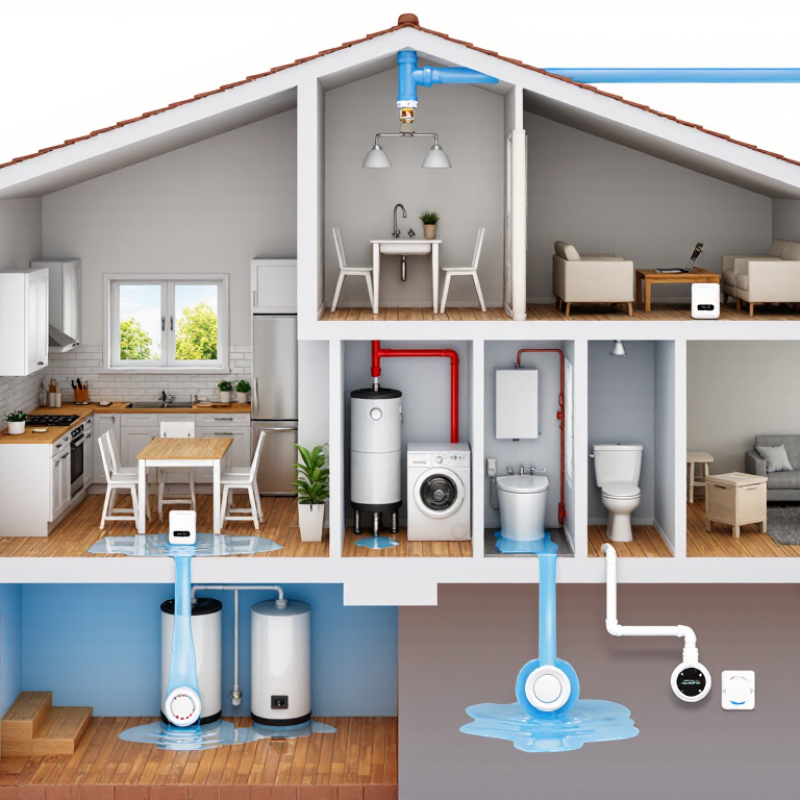
How to Choose the Best Water Leak Detector in 2026?

Understand Your Property’s Leak Risks and Monitoring Needs

Before choosing a water leak detector, map where water could escape and what damage might follow. Check beneath sinks, around the water heater, beside the washing machine, and near exposed pipes. A small puddle can stay hidden inside a cabinet. Pay extra attention to rooms above finished ceilings or valuable belongings.

A point sensor may suit one vulnerable spot, while a sensing cable can cover a longer path along a basement wall. Choose based on the layout, not just the number of sensors. Older plumbing, frequent travel, and a history of leaks may call for broader coverage. Still, a detector cannot prevent every kind of water damage.

Monitoring needs matter, too. If you are often away, look for alerts that reach you reliably and consider what happens during a power or internet outage. Check whether the device needs batteries, a hub, or regular testing. Useful details. Place sensors where a leak would reach them, not where they are easy to overlook. A drain pan may block water from reaching a floor sensor. That small placement mistake is easy to make, and worth checking before relying on an alert.

Compare Point Sensors, Cable Sensors, and Whole-Home Systems

How to Choose the Best Water Leak Detector in 2026?
Compare Point Sensors, Cable Sensors, and Whole-Home Systems

Point sensors sit near likely trouble spots, such as under a sink or beside a water heater. They are easy to place and useful for catching a small puddle early. But they only detect water where they touch the floor. A sensor tucked too far behind a cabinet may miss a leak.

Cable sensors cover longer paths. Run one along a basement wall, beneath a washing machine, or around a storage tank. They can detect water at multiple points along the cable, though placement takes more thought. Whole-home systems use connected sensors, and some can trigger an automatic shutoff valve. Check whether installation suits your plumbing and whether alerts work during a power or internet outage. No setup is perfect; I’d still inspect hoses and fittings now and then.

Tips: Match coverage to the risk, not just the room size. Test sensors after installation, and keep them clear of dust and stored boxes. If you choose automatic shutoff, confirm that the valve fits your pipe and that someone can operate it manually. A phone alert is helpful, but it cannot mop the floor.

How to Choose the Best Water Leak Detector in 2026? - Compare Point Sensors, Cable Sensors, and Whole-Home Systems

Comparison Factor Point Sensors Cable Sensors Whole-Home Systems
How They Detect Water Contacts at the sensor’s base detect water when it reaches that specific spot. A sensing cable detects water along the sections of cable designed to sense moisture. Typically monitors water flow through the home’s main plumbing line and may identify unusual or continuous flow.
Coverage Limited to the area immediately around each sensor. Covers a longer path, such as along a pipe, appliance, or floor perimeter. Monitors water use across the plumbing system; it may not pinpoint the exact location of a leak.
Common Placement Under sinks, near water heaters, beside washing machines, and around refrigerators with water connections. Along basement edges, beneath pipes, around water heaters, or in other areas where water could travel. At the main water supply line, usually near the home’s shutoff valve or water meter.
Installation Usually simple: place the sensor on a suitable surface and connect it to its alarm or network if supported. Requires laying and securing the cable in the intended detection area; cable length and placement matter. Often involves plumbing work and may require a qualified installer, especially when an automatic shutoff valve is included.
Alert Type Many models provide a local sound, an app notification, or both; features vary by model. Alerts are provided by the connected alarm or controller; remote notifications depend on the system’s connectivity. May alert to unusual flow or possible leaks; connected systems can send notifications, and some include automatic shutoff.
Automatic Water Shutoff Usually does not shut off the home’s water supply on its own. Usually alerts through a compatible controller; shutoff capability depends on the connected equipment. Available on systems that include or connect to a motorized shutoff valve. Not every whole-home monitor has this feature.
Best Suited For Protecting individual, high-risk appliances or plumbing fixtures at a relatively low installation complexity. Covering extended or irregular areas where water may spread before reaching a single point sensor. Monitoring overall household water flow and, on compatible systems, shutting off supply when a suspected problem is detected.
Main Limitation A leak may go undetected until water reaches the sensor’s location. Coverage depends on cable placement, length, and the sensing design; it does not necessarily monitor all plumbing flow. Flow-based detection can require configuration and may not identify every small leak or its exact location.
What to Check Before Buying Sensor count, alarm volume, power source, notification method, and whether a hub or Wi-Fi connection is required. Included cable length, whether cable can be extended, compatible controller, placement guidance, and replacement availability. Pipe size compatibility, installation requirements, power and connectivity, shutoff-valve inclusion, and how alerts are configured.
Practical Choice Choose point sensors for a few specific leak-prone locations. Choose cable sensors when a longer, defined area needs direct water detection. Choose a whole-home system for broader flow monitoring, especially if automatic shutoff is a priority and the plumbing is compatible.

Features, detection methods, installation needs, and compatibility vary by model. A layered setup can combine whole-home flow monitoring with point or cable sensors in high-risk locations.

Evaluate Alerts, Connectivity, Power, and Automatic Shutoff Features

How to Choose the Best Water Leak Detector in 2026?

A leak detector is useful only if its warning reaches someone in time. Compare audible alarms, app notifications, and optional text alerts. A loud siren helps when you are home, but it cannot alert you across town. For phone alerts, check whether the device needs a hub, a stable internet connection, or a subscription. Wi-Fi may be convenient, though signal strength can drop in basements and utility closets. Test the connection where you plan to place the sensor. Small details matter.

Power and shutoff features deserve equal attention. Replaceable batteries are easy to maintain, but they need regular checks. Sealed batteries may last longer, yet replacement can mean replacing the whole unit. Look for a low-battery warning. If the detector can close a water valve automatically, confirm that its valve size and pipe setup match your home. A shutoff can limit damage while you are away, but it adds moving parts that need testing. No setup is perfect; even a well-placed sensor can miss a leak outside its reach.

Tips: Place sensors near washing machines, water heaters, and under sinks, where drips often collect. Test the alarm and shutoff every few months. Keep one sensor near—but not directly beneath—a drain that often gets splashed. It is easy to overvalue extra features; reliable alerts and a reachable test button may matter more.

How to Choose the Best Water Leak Detector in 2026

Compare alerts, connectivity, power, and automatic shutoff before you buy.

Suggested evaluation rubric, not market statistics: prioritize reliable alerts, then check that connectivity fits your home, power options suit the installation, and automatic shutoff is compatible with your plumbing.

Check Installation Requirements and Compatibility with Your Home

Before choosing a water leak detector, check how it will be installed and powered. A battery-powered unit may fit under a sink with no nearby outlet, while a plug-in model needs a dry, accessible socket. If it connects through Wi-Fi, confirm that the signal reaches the basement, utility closet, or other intended location. Thick walls and metal cabinets can weaken reception. Check the path.

Think about what the detector must connect to. A simple sensor may sound an alarm, while a system with an automatic shutoff needs to match your pipe size, valve type, and plumbing layout. Read the installation guide before buying, and ask a qualified plumber if the valve connection is unclear. Compatibility is not always obvious from a product description.

Placement matters, too. Put sensors near likely leak sources, such as a water heater, washing machine, or sink cabinet, but keep them where you can reach them for testing and battery changes. A low sensor can detect a small pool sooner, though an uneven floor may affect contact. Test the alarm after installation, then repeat the test as the instructions recommend. It is easy to assume setup will take five minutes; awkward outlets or crowded pipes can make that estimate wrong.

Compare Reliability, Ongoing Costs, and Long-Term Support

Choosing the best water leak detector in 2026 means comparing dependable detection with the full cost of ownership. Reliability is more than a loud alarm: check sensor placement, power-loss behavior, connectivity, and whether the device still alerts you when Wi-Fi fails. Test it with a few drops of water, then confirm the notification reaches your phone. Small check, real value. The Insurance Information Institute reports that water damage and freezing represented 22.6% of homeowners’ insurance losses from 2018 to 2022, with an average claim of $13,954. That makes dependable alerts worth careful scrutiny, not just a low purchase price.

Ongoing costs can include batteries, a hub, app subscriptions, and replacement sensors. The U.S. Environmental Protection Agency estimates household leaks waste nearly one trillion gallons of water nationwide each year; even a modest leak can quietly raise a bill. Compare recurring fees and check whether basic alerts remain available without a subscription. For long-term support, look for clear warranty terms, accessible troubleshooting, and a stated update policy. Ask whether replacement parts will remain available. A polished specification sheet can still hide weak support. I would also reconsider any model whose alerts depend on a single internet connection; convenience is not the same as resilience.