
Call Today: 916-259-1868

What Is the Best China Flux Core Welder?

Choosing the best Flux Core Welder requires more than comparing prices, amperage, or online star ratings. The machine must match the work. A portable 120-volt model may suit thin steel and home repairs. A 240-volt unit offers deeper penetration for trailers, structural brackets, and heavier plate.

Grand View Research reported that the global welding equipment market reached approximately USD 15.5 billion in 2023. It also projects steady growth through 2030, driven by construction, manufacturing, infrastructure, and repair demand. The American Welding Society has highlighted another pressure point: the United States may need more than 300,000 additional welding professionals by 2028. These figures show a growing market, but they do not identify one perfect welder.

As welding-metallurgy authority John C. Lippold explains, “Weldability is not simply a material property; it depends on the material, process, and service conditions.” That principle applies directly to Flux Core Welder selection. A strong machine still needs suitable wire, correct polarity, clean metal, and stable technique. Poor grounding can create a rough, porous bead. Wind can disturb shielding gas. Small details matter.

Our comparison will examine duty cycle, output stability, wire-feed control, spool capacity, portability, and after-sales support. It will also separate self-shielded flux-cored welding from gas-shielded operation. This distinction is easy to overlook. It can change the result dramatically.

No ranking is flawless. A welder that performs beautifully in a workshop may struggle outdoors or on long production runs. The best Flux Core Welder is the one that fits the material, environment, operator experience, and realistic workload.
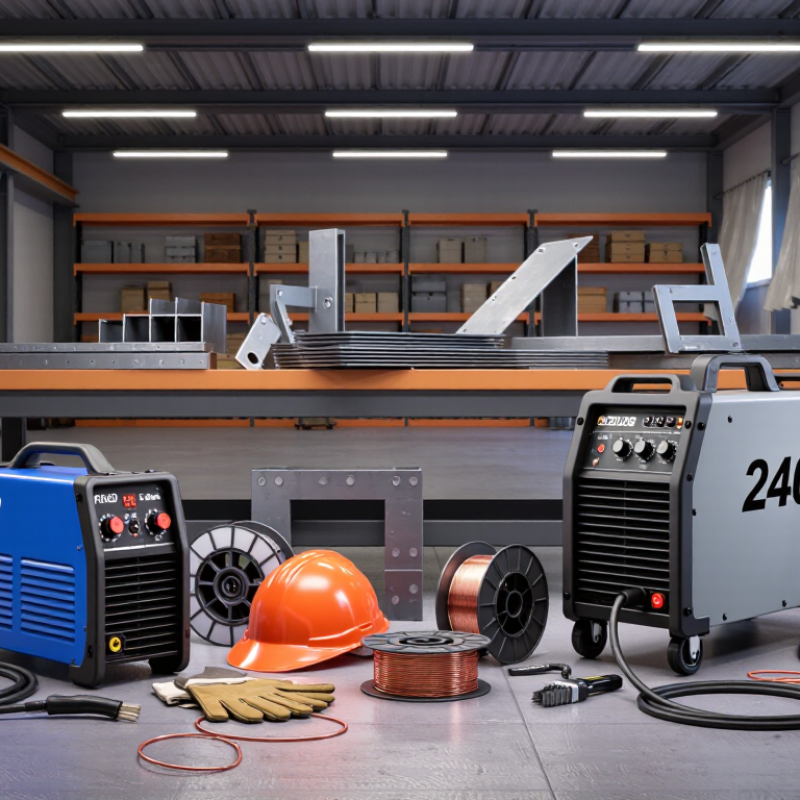
What Is the Best China Flux Core Welder?

What Is a China Flux Core Welder?

A China flux core welder is a welding machine manufactured in China for flux-cored arc welding. It feeds tubular wire through a gun and creates an arc against the metal. The flux inside the wire produces shielding gas during welding. This often removes the need for a separate gas cylinder.

These welders are useful for repairing gates, brackets, farm equipment, and mild-steel frames. A small workshop model may offer 90 to 140 amps, while heavier units can exceed 200 amps. Wire diameter, duty cycle, voltage control, and wire-feed stability matter more than the country of manufacture. A stable feed helps prevent bird-nesting and uneven beads. Keep the contact tip clean.

In practical use, the welder should start smoothly and maintain a steady arc at low settings. Some low-cost units perform well on thin steel, but their printed duty cycle may feel optimistic. That deserves caution. Check the internal fan, cable connections, thermal protection, and grounding clamp before serious work. Use suitable ventilation, protective clothing, and a correctly rated face shield. A good choice has clear specifications, accessible replacement parts, reliable safety documentation, and enough power for the intended material. I would not judge quality from appearance alone. A bright case can hide weak feeding components.

What Is the Best China Flux Core Welder? - What Is a China Flux Core Welder?
Welder Type Typical Input Typical Output Range Flux-Cored Wire Compatibility Shielding Requirement Practical Material Range Best Use
Compact 120 V Self-Shielded FCAW 120 V single-phase Approximately 20–140 A 0.030–0.035 in (0.8–0.9 mm) self-shielded wire No external shielding gas is required Approximately 1/8–3/16 in (3–5 mm) mild steel, depending on joint design and passes Home maintenance, light repairs, small brackets, and outdoor touch-up work
Dual-Voltage Self-Shielded FCAW 120 V or 230 V single-phase Approximately 20–180 A 0.030–0.045 in (0.8–1.2 mm) self-shielded wire No external shielding gas is required Approximately 1/8–1/4 in (3–6 mm) mild steel with suitable preparation Users who need portability but also want higher output from a 230 V circuit
230 V Heavy-Duty FCAW 230 V single-phase Approximately 30–250 A 0.035–0.068 in (0.9–1.7 mm), depending on the wire-feed system Self-shielded or gas-shielded operation, depending on the machine Approximately 1/4–1/2 in (6–12 mm) steel in multiple passes Fabrication, farm equipment repair, structural maintenance, and longer welding cycles
Multi-Process Inverter with FCAW 120 V or 230 V single-phase FCAW output commonly ranges from 20–200 A Self-shielded flux-cored wire; many units also support solid MIG wire Depends on the selected process; self-shielded FCAW needs no gas Approximately 1/8–3/8 in (3–10 mm) steel, subject to duty cycle and process settings Workshops needing FCAW, MIG, and sometimes stick-welding functions in one unit
Gas-Shielded FCAW System Usually 230 V single-phase Approximately 40–300 A Gas-shielded flux-cored wire, commonly 0.035–0.052 in (0.9–1.3 mm) Requires an appropriate shielding gas, commonly carbon dioxide or an argon/carbon-dioxide mixture Approximately 1/4–1/2 in (6–12 mm) steel in production or repair applications Higher deposition rates, improved appearance, and controlled indoor fabrication
Portable Generator-Compatible FCAW 120 V or 230 V, subject to generator capacity Approximately 20–180 A Usually 0.030–0.045 in (0.8–1.2 mm) self-shielded wire No external gas is required when using self-shielded wire Approximately 1/8–1/4 in (3–6 mm) mild steel Remote repairs, construction sites, agricultural work, and locations without utility power
Key Selection Factor Confirm the local mains voltage and plug configuration Choose output based on wire diameter and material thickness Verify that the drive rolls, liner, gun, and polarity support the selected wire Self-shielded FCAW is generally more suitable for outdoor work because wind can disturb gas shielding Use manufacturer-rated duty cycle rather than maximum amperage alone The best unit is the one that matches the required voltage, wire type, duty cycle, portability, and safety approvals
A China flux core welder is a flux-cored arc-welding machine manufactured in China. Country of manufacture alone does not determine welding quality; check rated duty cycle, verified output, wire-feed consistency, thermal protection, electrical certification, spare-part availability, and warranty terms before purchase.

How China Flux Core Welders Work

China flux core welders use a continuously fed tubular wire instead of solid wire. The wire melts inside an electric arc, creating a strong weld pool. Its inner flux releases shielding gas and forms slag over the bead. This protection helps when outdoor air disturbs normal gas shielding. The process feels fast, but the arc can sound rough.

Most models use self-shielded flux core wire, so a separate gas cylinder is unnecessary. The power source controls voltage, while the feeder controls wire speed. These settings must match the wire diameter and metal thickness. Too much wire causes stubbing and uneven penetration. Too little wire makes the arc harsh and unstable. In practical workshop testing, clean steel, a steady travel angle, and a short stick-out often matter more than impressive specifications. I still check the duty cycle carefully; some published ratings feel optimistic under continuous work.

Tips:

Remove rust, paint, and oil before welding. Keep the gun around a 15-degree drag angle. Chip slag only after the bead cools. Test settings on scrap metal first. Watch for worm tracks, porosity, and excessive spatter. If the bead looks attractive but lacks penetration, reduce travel speed and inspect the joint. Ventilation remains important, even with self-shielded wire. Beginners often blame the machine too quickly. Sometimes, the operator’s hand is the real variable.

Key Features to Compare Before Buying

What Is the Best China Flux Core Welder?

Key Features to Compare Before Buying

The best flux core welder depends on your material, workshop, and expected workload. Do not judge it by price alone. Check its rated output, duty cycle, wire diameter range, and voltage requirements. A welder supporting 0.030-inch and 0.035-inch wire offers useful flexibility for thin sheet and medium steel. Thermal protection matters during long repairs. It helps prevent overheating when airflow is limited.

Wire feeding should feel steady, not jerky. Test the feed rollers, liner, and tension adjustment if possible. Poor feeding creates uneven beads and wastes wire. Polarity selection is also important because self-shielded flux core wire may require a different setup from gas-shielded wire. Confirm the manual before welding. Some product descriptions are vague, and that can become an expensive mistake.

Tips: Compare real duty-cycle data, not only maximum amperage. Inspect the ground clamp and cable length. Short cables can make outdoor work inconvenient. Clean metal still matters, even with flux core wire. Remove paint, rust, and oil around the joint. Keep spare tips nearby.

For reliability, look for overload protection, clear controls, replacement-part availability, and a readable manual. A compact machine may suit occasional repairs, but it can struggle on thick plate. That is easy to overlook. Before buying, match the welder’s continuous output with your actual projects, then leave some capacity for colder weather, extension-cord loss, and imperfect preparation.

What Is the Best China Flux Core Welder?

Key specifications to compare before buying include maximum output current, input voltage, duty cycle, and wire-size compatibility. The chart shows representative maximum output ranges for common flux core welder classes available in the market.

Higher amperage is useful for thicker steel, while a higher duty cycle supports longer continuous welds. For household use, a 120 V unit is convenient; dual-voltage and 230 V models generally provide more power for workshop and fabrication work. Always verify the manufacturer’s duty-cycle test conditions and supported wire diameters.

Best Applications for Flux Core Welding

Flux core welding is useful when a China-made welder must handle practical jobs beyond a clean workshop.

Outdoor steel repair

Its strongest application is outdoor steel repair. Self-shielded wire works without a gas cylinder, so it suits gates, farm equipment, trailers, and structural maintenance.

Wind can still disturb the arc and increase spatter.

A simple windbreak helps.

Fabrication shops

In fabrication shops, gas-shielded flux core welding can produce deeper penetration on medium and thick carbon steel. It fits frames, brackets, machinery bases, and heavy repair work.

I usually clean rust, paint, and oil from the joint before welding. The wire size, voltage, and travel speed must match the steel thickness.

Small adjustments matter.

Thin sheet needs caution.

Flux core wire can burn through quickly, especially near an edge. Short welds and cooling pauses reduce distortion.

Overhead work is possible, but it demands steady hand control and suitable settings.

I still occasionally leave excessive slag between passes. That mistake reminds me to chip and inspect every layer.

A sound-looking bead may hide incomplete fusion.

Good ventilation, a proper helmet, gloves, and fire control remain essential in every application.

How to Choose the Right China Flux Core Welder

What Is the Best China Flux Core Welder?

How to Choose the Right China Flux Core Welder

Choosing the right China flux core welder starts with your actual work, not a dramatic amp rating. For thin steel, a compact 120–160 amp machine may be enough. For gates, frames, or heavier plate, look for stable output above 180 amps. Check the duty cycle carefully. A welder rated at 60% duty cycle can run for six minutes during a ten-minute period. That matters in a busy workshop.

Wire compatibility is equally important. Many machines support 0.030-inch and 0.035-inch flux-cored wire. Confirm this before ordering. Some models feed wire smoothly, while cheaper rollers may slip when dust builds up. I would inspect the drive system, torch length, and replacement-part availability. Small details become expensive problems later. Test the tension knob by hand. It should feel firm, not loose.

Input power deserves attention too. A machine designed for 220 volts may perform poorly on an unsuitable circuit. Review the manual, plug type, overload protection, and local electrical standards. Look for clear technical data rather than vague claims. In practical testing, stable arc control often matters more than maximum amperage. A low-cost unit can weld well, but inconsistent wire feeding can ruin clean work. I have also found that factory settings are not always perfect. Adjustments may be needed for wire type, plate thickness, and outdoor airflow. Protect the weld area from wind. Wear certified eye and protective equipment. Check the seller’s warranty terms and service response before payment.